JUVENA 2025: The abundance of juvenile anchovies in the Bay of Biscay has doubled the historical average
Últimas noticias
AZTI wins the 24th JACUMAR Award with a pioneering PCR method to determine the sex of sturgeons
Ethics in Artificial Intelligence for Food and Health: From “Can Do” To “Should Do”
Ocean Acidification in the Bay of Biscay: two decades of data confirm a rising trend
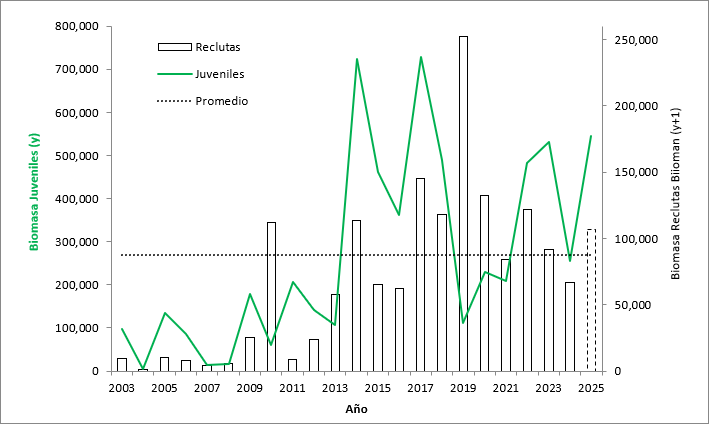
- The JUVENA 2025 campaign, led by the AZTI technology centre and promoted by the Basque Government, estimates a juvenile anchovy biomass of 544,781 tonnes, more than twice the average of the last two decades.
- The results point to strong recruitment for the 2026 coastal fishing season and confirm that the anchovy stock is in good health.
Pasaia, 25 November 2025 – The JUVENA 2025 scientific survey, promoted by the Basque Government’s Department of Food, Rural Development, Agriculture and Fisheries and coordinated by the AZTI technology centre, has finished assessing the juvenile anchovy population in the Bay of Biscay. The results indicate a high level of abundance, with juvenile biomass estimated at 544,781 tonnes. This figure is double the historical average and a significant increase on the 255,344 tonnes recorded in 2024.
The results of the JUVENA survey, which was carried out between 5 September and 10 October, indicate strong recruitment for the 2026 coastal fishing season and reinforce the forecasts established by the BIOMAN survey in May. Another survey led by AZTI estimated high adult biomass and egg production.
Both surveys were carried out as part of monitoring programmes run by the Basque Government and the Spanish Ministry of Agriculture, Fisheries and Food (MAPA). They provide a comprehensive picture of the species’ life cycle, which is essential for the sustainable and adaptive management of one of the most valuable resources on the Cantabrian coast.
‘The 2025 data show that the stock is in good condition and emphasise the importance of continuing to manage fisheries based on scientific knowledge,’ says Leandro Azkue, the Basque Government’s Deputy Minister for Fisheries and Coastal Development.
Combining the JUVENA and BIOMAN time series enables us to accurately estimate recruitment and stock evolution. This provides essential information for the scientific assessments carried out by the International Council for the Exploration of the Sea (ICES).
Índice de contenidos
Favourable oceanographic conditions
JUVENA’s estimate of abundance this year, which covered a total area of 38,160 square nautical miles, confirms the excellent survival of juveniles born in spring. It also indicates very favourable oceanographic and productivity conditions for larval and juvenile development.
‘The European anchovy is a short-lived species with high year-to-year variability, and it is highly sensitive to oceanographic conditions in the Bay of Biscay. With a life cycle of just two to three years and reproduction dependant on factors such as water temperature, food availability and ocean currents, its biomass can vary significantly from one year to the next,” explains Rogelio Pozo, CEO of AZTI.
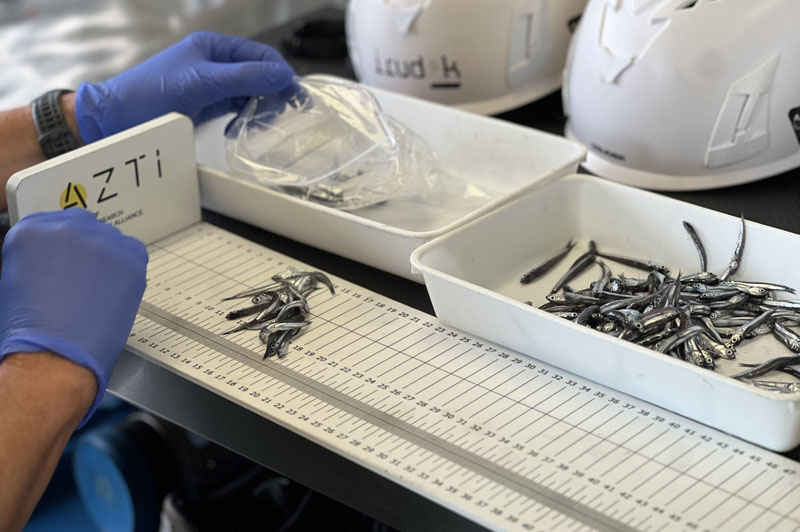
The average length of the analysed juveniles was 6.3 centimetres, which is below the time-series mean and typical of years with high spawning survival rates.
In addition, the results validated by the ICES WGACEGG working group will be combined with BIOMAN survey data and fleet catch data to create a synthetic stock index. This index will serve as the basis for catch advice and the determination of the total allowable catch (TAC) for 2026.
“These studies continue to provide essential scientific data and demonstrate the effectiveness of the collaboration between the scientific community, public authorities, and the fishing sector in ensuring the sustainable and responsible management of the anchovy population,” added Pozo.
Results of the 2025 anchovy fishing season
The 2025 anchovy fishing season concluded with high catch levels and stable market conditions.
- Available national quota: 28.6 million kilos.
- Total landings: 21.3 million kilos (74% of the national quota).
- Quota allocated to Basque fishers: 8.05 million kilos.
- Landings by the Basque fleet: 7.2 million kilos (90% of its quota).
- Average first-sale price at auction: €2.05/kg, higher than in 2024 (€1.50/kg).