Blog
Sisyphus and planetary awareness
On 8 and 9 October, we will be at Uhinak, the 7th International Conference on Climate Change and Coastal Areas.
On 8 and 9 October, we will be at Uhinak, the 7th International Conference on Climate Change and Coastal Areas.
On the Empordà plain, there are plans to build a wind farm. Ana, who lives in one of the affected villages, opposes the project because of its impact on the landscape and migratory birds. Jordi, her neighbour, argues that renewable energy generation is essential. A similar situation has arisen over plans to open mines in Cáceres to extract rare earths and other minerals, such as cobalt, which are essential for electric car batteries, mobile phones and wind turbines. Both projects divide local communities, yet share the same goal: tackling climate change.
We are no strangers to these tensions in the Basque Country either, whether in debates about renewable energy developments, the use of coastal land or the management of our forests and uplands. The energy transition increasingly involves trade-offs, alongside a tangled web of interests.
Europe is indeed beginning to reduce its greenhouse gas emissions. Yet it is doing so partly by purchasing large quantities of the minerals that underpin climate change mitigation from countries such as China. Extracting these minerals generates waste containing heavy metals, chemicals and radioactive elements, contaminating soils and groundwater and harming the health of nearby communities.
Climate action — or inaction — offers many telling examples of the trade-offs involved in mitigation and adaptation strategies, but also of society’s erratic and irrational behaviour. As wars intensify across the world, beyond the atrocities they entail, what some build is destroyed by others, and oil is quite literally burned, setting us on course to exceed 2°C of warming above pre-industrial levels in the coming decades. We are already at the 1.5°C threshold.
After a summer of successive heatwaves, the global monthly average surface air temperature reached a new record this August, at 1.65°C above pre-industrial levels, according to Copernicus data. This naturally prompts us to ask whether climate change is accelerating. And while we ask these questions, the years pass and certain extreme events become more severe.
The floods caused by the cut-off low weather system, known in Spain as a DANA, in Valencia provide another example of the contradictions between what we know we should do and what we actually do. We now have extensive knowledge and technological capabilities in meteorology, hydrology and early warning systems. Yet we continue to allow people to live and build in areas we know are at high risk of flooding, whether along riverbanks or on the coast. Along the entire Cantabrian coast, we know precisely when astronomical tides occur and how frequently weather-driven changes in sea level arise. From this, we can determine the flood risk for every square metre of coastline. Even so, storms cause damage almost every year. We also know that this will worsen, because we understand current and projected rates of sea-level rise and the increasing frequency of extreme wave events.
As in the Greek myth of Sisyphus, we move forwards and backwards at the same time. However, we should distinguish between the trade-offs inherent in any profound transformation and the contradictions that hold it back. The ecological transition requires difficult decisions, sacrifices and a balance between legitimate interests. But it cannot succeed if some actions systematically cancel out the benefits of others.
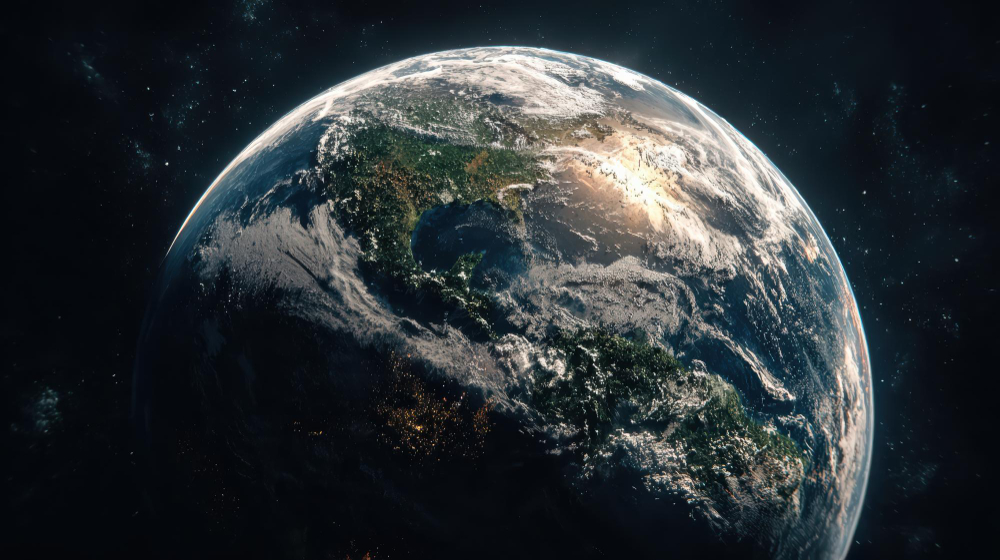
The question is not whether to choose a single path, but how to ensure that all paths lead in the same direction. More than half a century ago, the image of Earth suspended in the darkness of space deepened our awareness that we share a single, finite and vulnerable planet. Today, as international governance grows weaker and warming approaches dangerously close to 2°C, it is more urgent than ever to rekindle that shared planetary awareness and strengthen international cooperation mechanisms capable of addressing challenges that no country can resolve alone.
Guillem Chust is AZTI’s Coordinator for Global Change in Marine Ecosystems and Scientific Director of the UHINAK conference.
Opinion piece published in Diario Vasco.