Blog
Indice de contenidos
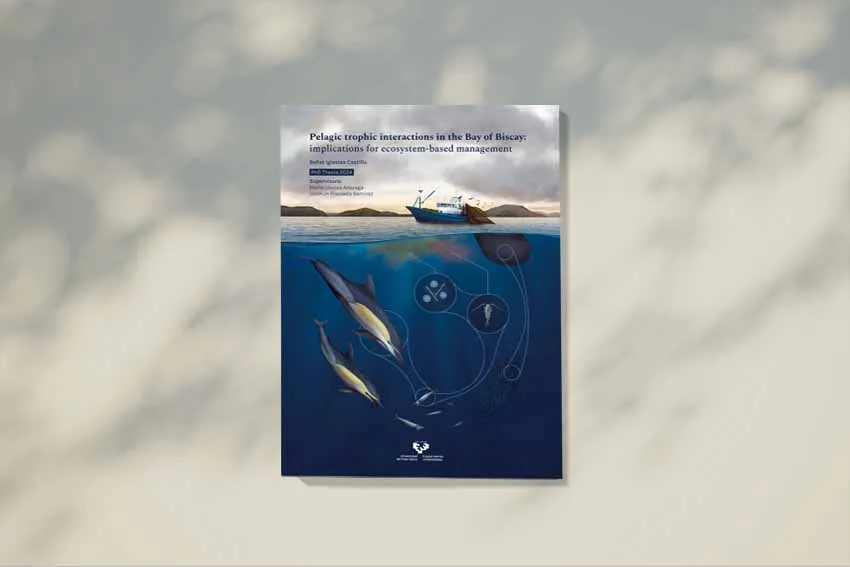
El pasado 31 de enero de 2025, Beñat Iglesias defendió su tesis doctoral con una presentación y discusión sobresalientes de sus principales resultados. La tesis, titulada “Pelagic trophic interactions in the Bay of Biscay: Implications for ecosystem-based management”, fue defendida en el PIE de la UPV/EHU. Este trabajo ha sido dirigido por Maite Louzao en AZTI e Izaskun Preciado en el IEO de Santander y se ha realizado en el marco del proyecto EPELECO.
La tesis obtuvo calificación de Sobresaliente Cum Laude por unanimidad.
Marine ecosystems are structured by complex trophic interactions, including predator-prey dynamics and energy transfer within ecological networks like food webs. These interactions are vital for ecosystem stability, with well-connected networks offering resilience and weak connections increasing susceptibility to disruptions. Primary productivity, driven by phytoplankton in the photic zone, forms the base of the marine food web, supporting diverse species and interactions across depth layers, from surface waters to the deep sea.
In the Bay of Biscay (BoB), dynamic oceanographic patterns, influenced by factors like wind and river discharges, drive high primary productivity. Seasonal changes, including fluctuations in temperature, light, and nutrient availability, create cycles of phytoplankton blooms, which sustain zooplankton and higher trophic levels. These seasonal dynamics underscore the need for ecosystem-based management (EBM) to address environmental variability.
Key species such as sardines and anchovies play crucial roles as energy conduits, linking lower and higher trophic levels. Niche differentiation among top predators like cetaceans and seabirds promotes biodiversity by reducing competition. This understanding of trophic interactions highlights the importance of conserving pivotal species and implementing adaptive EBM strategies to mitigate human impacts and maintain ecosystem integrity in this biologically rich region.