News
Content index
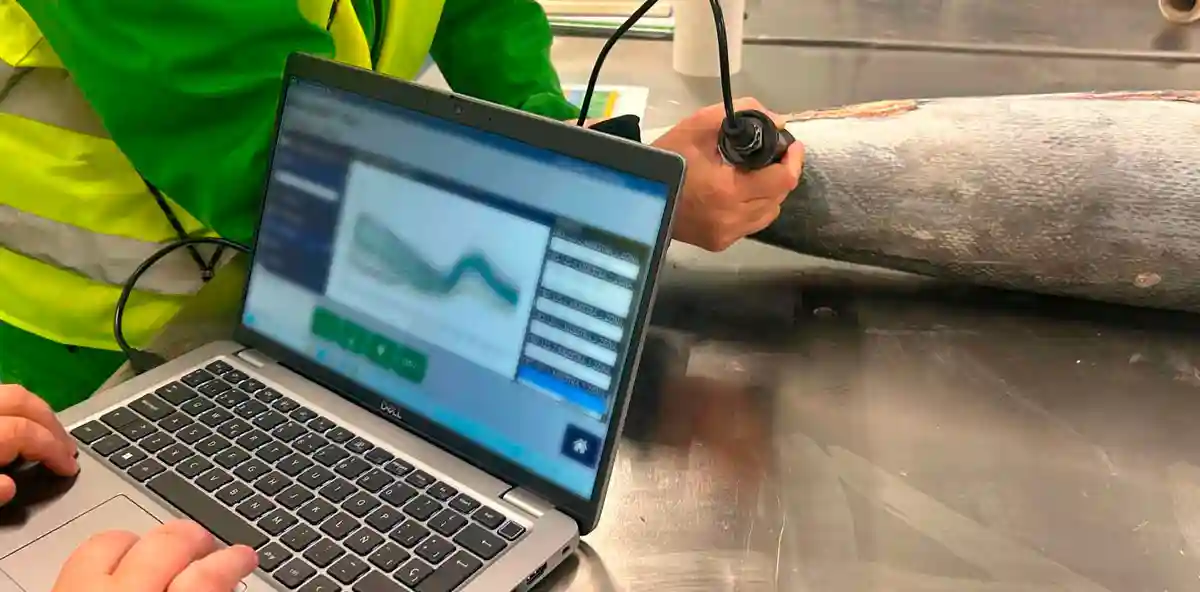
Derio/Murcia, Spain, 15 October 2026. AI Talentum and AZTI have released results from the first application of Xpectra to fish oil quality control. The partners are continuing to develop the solution following its presentation at Food 4 Future 2026. Combining NIR spectroscopy with artificial intelligence, Xpectra monitors quality and process parameters in real time, directly in production environments and without destroying samples. It enables businesses to reduce their reliance on external testing or slower laboratory checks, identify potential quality deviations earlier and make operational decisions more quickly and reliably, with better traceability.
The solution’s first application focuses on fish oil, a high-value product in the food and fish by-products sectors. The results demonstrate Xpectra’s potential for use with other food industry products and processes where speed, traceability, analytical reliability and real-time decision-making are critical.
Xpectra offers a complete, turnkey alternative to purchasing an NIR instrument without application-specific chemometric models or sending samples to external laboratories. It combines scientific expertise, artificial intelligence, specialist software and technical support. Its strength lies in models that are calibrated and validated against reference methods, tailored to real production conditions and suitable for use by non-specialist staff.
AI Talentum provides the technology platform, software, connectivity, integration with commercially available NIR instruments, commissioning and ongoing technical support. AZTI contributes its scientific expertise in NIR spectroscopy, spectral analysis, chemometrics, the calibration and validation of AI-based models, and the technical interpretation of results.
Together, the partners provide a comprehensive solution that is straightforward to use, including for staff without specialist expertise. Xpectra includes the selection of the most suitable commercially available NIR instrument for each application, software implementation, system calibration and the development of models tailored to the product, process and industrial requirements.
“NIR spectroscopy provides rapid information about product quality without destroying the sample. The main scientific challenge is to develop robust models that are calibrated against reference methods and adapted to real production conditions. For this first application, we have analysed different batches of fish oil produced throughout the year, recording their spectral fingerprints and correlating them with laboratory test results and the quality parameters being assessed,” explains Idoia Olabarrieta, a senior researcher at AZTI.
Xpectra works in two stages. First, NIR instruments capture the product’s spectral fingerprint: a pattern that reveals its characteristics through the way it interacts with infrared light. The platform then processes these data using qualitative and quantitative models hosted in the cloud. The results are traceable and displayed visually, making them accessible to staff without advanced technical expertise.
This approach can replace or complement certain slower, more expensive laboratory analyses while maintaining the technical rigour required for industrial use. As it relies on non-destructive testing, the sample is preserved during analysis. This offers a significant advantage when testing valuable products or carrying out frequent production-line checks. It can extend quality control coverage well beyond periodic laboratory sampling, moving towards inspection of the entire production output.
Xpectra grew out of a practical industry need, first identified in the fish by-products sector but also relevant to other industries. It has been developed through collaboration between a technology company, a research centre and industrial partners. Barna, a company specialising in by-products management, has helped shape the solution around a specific challenge: providing fast, reliable fish oil quality control that can be used in day-to-day production.
“The results from fish oil quality control show that combining NIR spectroscopy, artificial intelligence and a platform that production staff can readily use can meet real industry needs. This first application strengthens the partnership between AI Talentum and AZTI and paves the way for the development and validation of new models for other products and industrial processes,” says Antonio Vicente Contreras, chief executive of AI Talentum.
For businesses across the food value chain, Xpectra offers a way to digitalise quality control, improve the traceability of test results, reduce reliance on external laboratories and make decisions faster. It can also help detect quality deviations early, optimise processes and generate data to improve production efficiency.
In the fish oil pilot, improved classification and production management based on quality point to a potential increase in revenue of up to 12.5% compared with relying solely on conventional analysis. This estimate must be interpreted in the context of the pilot and the conditions assessed.
The solution reflects a growing trend in the food industry: the use of artificial intelligence, spectral analysis and data science to turn traditional analytical workflows into faster, connected and scalable systems. Xpectra demonstrates technology transfer in practice, combining AI Talentum’s digital capabilities with AZTI’s scientific expertise to address specific industry challenges.
Xpectra aims to accelerate the digitalisation of food quality control by connecting advanced analytical expertise with practical solutions for production environments. Following its first application to fish oil, the platform could be extended to other industrial applications through the development and validation of models for each use.