News
Content index
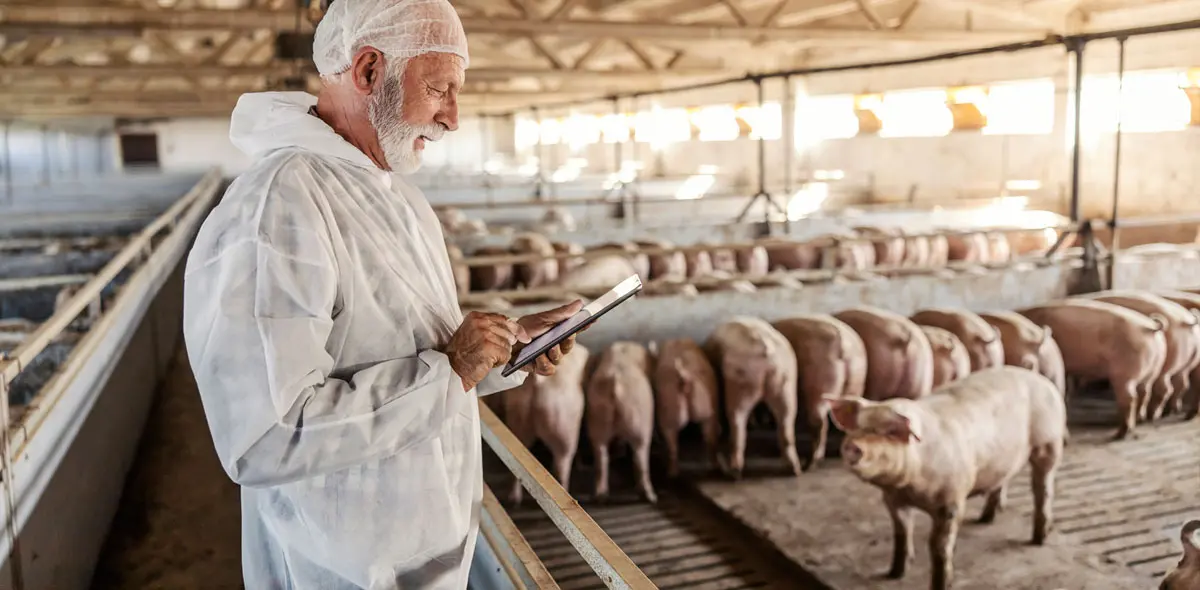
Derio, 30 September 2026. The BIOTEGANIA project continues to advance the development of an integrated digital biosecurity system for pig and poultry production, combining data analysis, mathematical modelling, rapid diagnostics and artificial intelligence. The project is also developing new bacteriophage-based biotechnology tools as an innovative alternative to antibiotics for controlling bacterial pathogens. The aim is to enable farms to anticipate health risks, prioritise their biosecurity measures and act before a pathogen has a chance to spread, rather than responding only once the problem has already emerged.
The results achieved to date combine practical on-farm application with scientific and technological development, and are relevant to sector companies, the research community and public authorities involved in animal health.
Coordinated by Grupo Jorge on the business side and by AZTI on the scientific and technological side, BIOTEGANIA brings together livestock, agri-food and biotechnology companies, universities and research centres specialising in animal health, biosecurity, diagnostics and pig and poultry production.
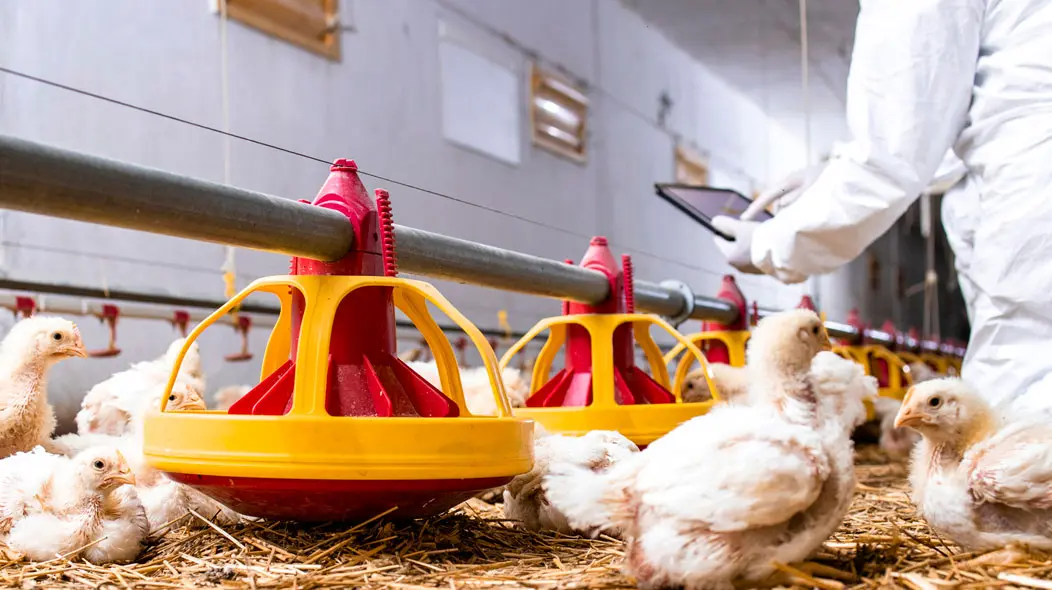
BIOTEGANIA’s digital biosecurity network now connects 487 pig facilities (CUARTE – Grupo Jorge and Sánchez Romero Carvajal) and poultry facilities (Cobb España and Oblanca). The system records movements of animals, people, vehicles and supplies between facilities, making it possible to identify potential critical transmission points and assess how changes to transport routes, among other measures, can reduce health risks across the network, rather than at a single isolated farm.
The system is complemented by a mathematical model that individually assesses the probability of pathogens entering each farm through five routes: animals, semen, vehicles, visitors and geographical proximity to other facilities. This information makes it possible to prioritise preventive measures where they can be most effective, optimising technical and financial resources instead of applying generic protocols.
On semi-extensive Iberian pig farms, BIOTEGANIA has adapted a QR-code access registration system that replaces paper forms and improves the traceability of visits. This is particularly relevant in these production systems, which are more open and spread over larger areas than conventional intensive farms, where implementing QR codes and tracking vehicles within a smaller area is more straightforward. Within farms, the project’s digital tools, such as Biorisk, also make it possible to review routes and working practices to identify opportunities for improving day-to-day operations.
BIOTEGANIA is working on a platform that integrates information on biosecurity, environmental conditions, production, medicine use, microbiological results, and animal health and welfare biomarkers. Integrating these previously dispersed data sources is one of the project’s main technical challenges.
Using these data, the project is developing four artificial intelligence models, designed to optimise feed logistics, anticipate epidemiological risks, generate early health alerts and produce area-wide biosecurity maps.
The ultimate aim is to help companies move from a mainly reactive approach to a more preventive one based on objective, up-to-date information, while also making that information useful for designing animal-health public policies at territorial level.
“Our aim is to transform the information generated by farms into predictive tools that make genuine on-farm disease prevention possible. We want to stop reacting and get ahead of the problem,” says Daniel Crespo, a researcher at CUARTE – Grupo Jorge and the project’s business coordinator.
“Biosecurity is not only about preventing pathogens from entering. We also need new tools to detect and control them, reducing antimicrobial use and moving towards more sustainable production models,” explains Amaia Lasagabaster, a food biotechnology expert at AZTI and the project’s scientific and technological coordinator.
In diagnostics, the project has developed portable molecular assays to detect bacteria relevant to the pig and poultry sectors, such as Brachyspira hyodysenteriae and pathogenic variants of Escherichia coli. Currently being validated with real samples, these tools could enable faster diagnosis directly on farms, shortening response times in the event of potential outbreaks.
At the same time, BIOTEGANIA has created and characterised extensive collections of bacteriophages active against some of the main pathogens of interest in animal production and food safety, including Escherichia coli, Campylobacter, Salmonella, Enterococcus and Listeria.
Bacteriophages, viruses that specifically infect bacteria, are among the most promising alternatives to antibiotics for controlling these pathogens. The work carried out includes isolating new phages, assessing their activity against different bacterial strains and selecting the candidates with the greatest potential for application.
These advances provide the basis for future biocontrol solutions designed to prevent and reduce the presence of pathogens throughout the agri-food chain, from primary production to food processing, in line with the EU’s Farm to Fork strategy.
Taken together, the rapid diagnostic tools and new bacteriophage-based solutions strengthen farms’ capacity for prevention, help improve animal health and welfare, and support a safer and more sustainable food chain with less dependence on antimicrobials.
BIOTEGANIA’s developments (digital network, mathematical modelling, artificial intelligence, rapid diagnostics and biotechnology) are based on a single underlying approach: understanding animal health, food safety and public health as interconnected elements. BIOTEGANIA therefore integrates tools for prevention, early detection and pathogen control from a One Health perspective. This integrated approach enables results obtained in the laboratory, through data analysis or in the design of mathematical models to be applied directly to day-to-day farm operations.
The project results will be presented at the sector webinar “New strategies for biosecurity and pathogen control in pig and poultry production: innovation, data and on-farm application”, which will take place on Wednesday 21 October 2026, from 10:00 to 11:30.
Aimed at companies and technical professionals in the production sector, as well as the scientific community and other stakeholders interested in animal health, the session will showcase the solutions developed by BIOTEGANIA and their potential application to pathogen prevention and control under real production conditions.
Registration (webinar in Spanish): BIOTEGANIA. Nuevas estrategias de bioseguridad y control de patógenos en porcino y avicultura: innovación, datos y aplicación en campo.
BIOTEGANIA is an industrial research project funded by the Centre for the Development of Technology and Innovation (CDTI) and the State Research Agency (AEI) of the Spanish Ministry of Science, Innovation and Universities. Its aim is to develop an integrated system combining digital biosecurity, sensing technologies, artificial intelligence and biotechnology to prevent, detect and control emerging diseases in pig and poultry production through a One Health approach.
The consortium comprises CUARTE–Grupo Jorge, SERPROVIT, ADA, EXOPOL, Sánchez Romero Carvajal, COBB and OBLANCA, together with AZTI, the Universitat Autònoma de Barcelona, the Universitat Politècnica de València, Universidad Cardenal Herrera-CEU, Universidad Complutense de Madrid and CECAV. This combination of companies from the production sector and research centres reflects the project’s multidisciplinary approach. The project also has the support of ANPROGAPOR (National Association of Pig Producers) and AVIANZA (Interprofessional Association of Poultry Meat), which will help disseminate the project’s advances across both sectors.
More information: www.biotegania.eu