News
Content index
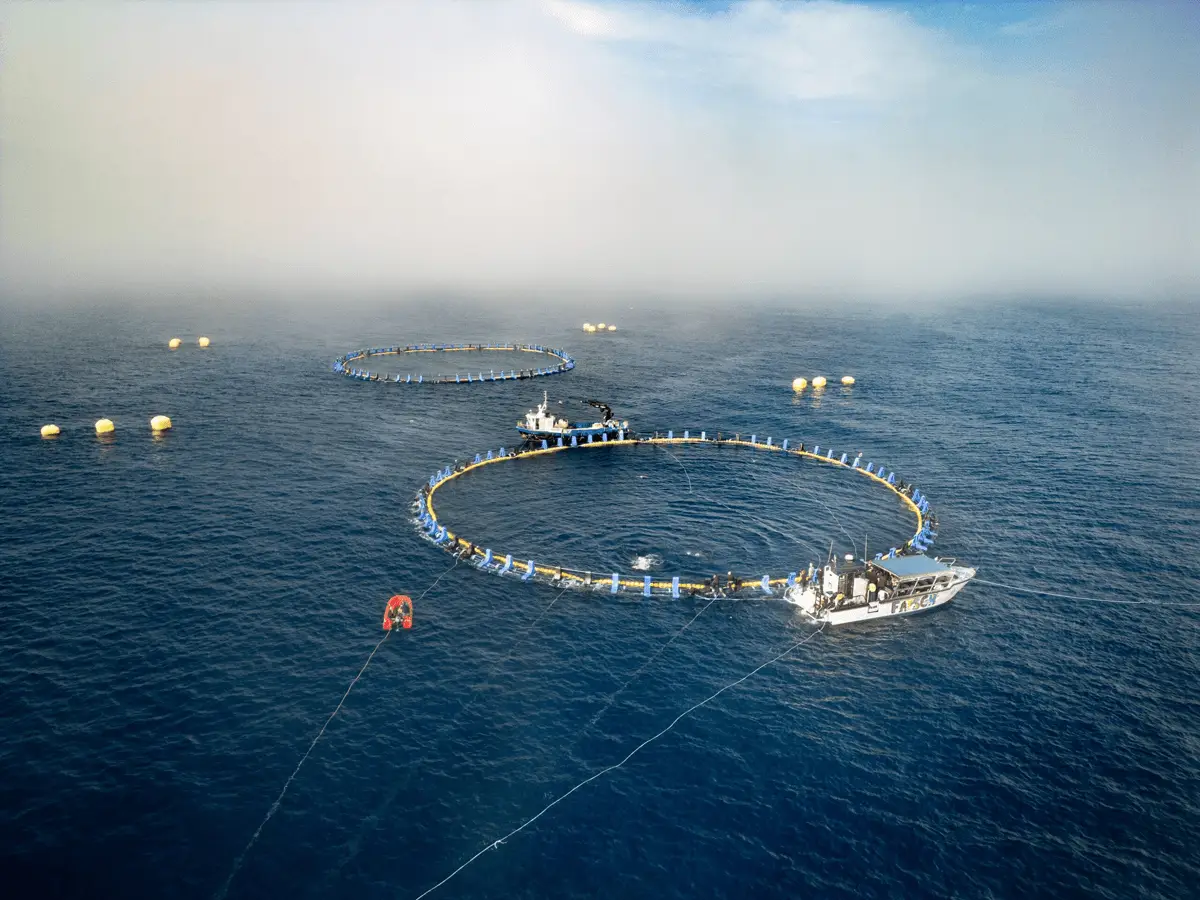
Getaria, 11 June 2026. The pilot campaign carried out in 2025 demonstrated that Atlantic bluefin tuna ranching in offshore submersible cages is technically feasible in the Bay of Biscay and provided the basis for assessing its commercial viability. ItsasBalfegó successfully completed its first ranching cycle with 80 Atlantic bluefin tuna captured 48 kilometres off the coast of Gipuzkoa. The operation was conducted under the supervision of the Spanish Secretariat-General for Fisheries and the International Commission for the Conservation of Atlantic Tunas (ICCAT), in accordance with the approved protocol.
With the technical feasibility now demonstrated, 2026 marks the next stage of the project: putting in place the conditions required to support future commercial-scale operations.
Led by Balfegó and the technology centre AZTI, ItsasBalfegó is currently focusing on the three factors that will determine the transition from a pilot initiative to a viable, safe and sustainable commercial operation: accurately locating the bluefin schools to be transferred to the offshore cages, building a specialist workforce capable of managing large-scale operations, and securing a stable regulatory framework that provides legal certainty for long-term investment.
“We have demonstrated that Atlantic bluefin tuna ranching in the Bay of Biscay is technically feasible. The next step is to ensure it can be carried out safely, sustainably and at commercial scale. That is why 2026 is all about putting the right foundations in place,” says Juan José Navarro, Deputy Director of ItsasBalfegó.
During the 2025 pilot campaign, locating a school of Atlantic bluefin tuna weighing more than 100 kg using purse seine gear required almost two weeks at sea. Such an effort would not be operationally or economically sustainable under commercial conditions.
To improve the efficiency of future fishing operations, AZTI and the Basque fishing industry will carry out the first comprehensive Atlantic bluefin tuna survey ever undertaken in the Bay of Biscay between June and July. The campaign will identify and characterise bluefin schools, providing the data needed to produce a distribution map that will support future capture operations in Cantabrian waters.
Scaling up from 80 fish to commercial volumes of around 1,500 Atlantic bluefin tuna weighing more than 100 kg requires highly trained commercial diving teams operating directly at the offshore ranching facilities. Capturing, towing and transferring live tuna between cages are technically demanding operations that require specialist training to ensure both diver safety and fish welfare.
To prepare for this next phase, future ItsasBalfegó dive teams are currently undergoing training at Balfegó’s facilities in the Mediterranean, where the company has built up decades of experience in commercial Atlantic bluefin tuna ranching. This training will enable that operational expertise to be transferred to the Bay of Biscay.
The 2025 pilot campaign was made possible through a temporary authorisation granted by the Spanish Ministry, as purse seine fishing is not generally permitted within the twelve-nautical-mile limit in the Bay of Biscay.
Moving towards commercial-scale operations now requires permanent authorisations from ICCAT, the Spanish Secretariat-General for Fisheries and the Basque Government. These regulatory procedures are currently under way. For this reason, ItsasBalfegó has decided not to commit to a large-scale campaign until a robust and stable legal framework is in place.
“We are not building a project for one season, but for decades. That requires a solid regulatory foundation, and we are working closely with all the relevant authorities to achieve it,” Navarro adds.
Consistent with its objective of involving the fishing industry throughout the entire value chain—from capture through to marketing—ItsasBalfegó is currently in discussions with representatives of the Basque fishing sector regarding their formal participation as partners in the initiative.
Their involvement would reinforce the collaborative nature of the project and help align the interests of all stakeholders involved in developing a sustainable Atlantic bluefin tuna value chain in the Basque Country.
ItsasBalfegó will enable the Basque Country to make full use of its allocated Atlantic bluefin tuna fishing quota, avoiding the need to transfer quota elsewhere, while creating skilled employment along the Basque coast and supplying premium-quality bluefin tuna to the region’s internationally renowned fine dining sector.
By adopting a progressive scaling approach, the project also supports the sustainable harvesting of the resource, improves the efficiency of fishing operations and ensures high standards of fish welfare throughout the ranching process, fully in line with the sustainability principles that have guided the initiative from the outset.
The project fully respects the fishing grounds and quota allocated to the artisanal fleet, which remain unchanged, and has been designed as a complementary activity that diversifies opportunities for the sector without competing with traditional fisheries.
All project activities are carried out under the supervision and authorisation of the Basque Government, the Spanish Secretariat-General for Fisheries, ICCAT, the Maritime Authority, the Provincial Coastal Service, and the municipalities of Getaria and Zarautz. Environmental performance is continuously monitored through an integrated system of sensors and underwater cameras.
ItsasBalfegó is a pioneering initiative in the Bay of Biscay promoted by Balfegó—an international leader in Atlantic bluefin tuna fishing, ranching and marketing in the Mediterranean—and AZTI, a technology centre specialising in marine and food research and innovation. The ranching facility, comprising two offshore submersible cages, is located 3.7 nautical miles off the port of Getaria.