News
Content index
Sukarrieta, 21 May 2025 – New onboard technologies developed by AZTI, in partnership with Spanish tuna industry groups OPAGAC and ANABAC, have proven effective in improving the safe and efficient release of vulnerable elasmobranchs (sharks and rays) accidentally caught in tropical tuna purse seine fisheries. The results, just published in the ICES Journal of Marine Science, have been highlighted as the “Editor’s Choice”: https://doi.org/10.1093/icesjms/fsaf057.
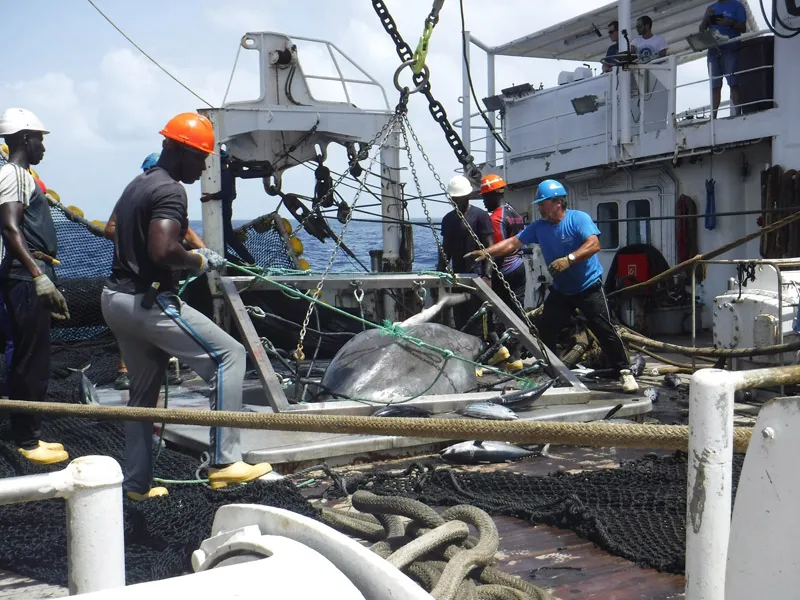
The technologies—known as Bycatch Release Devices (BRDs)—include release ramps, stretchers, velcro leashes, hoppers, lower-deck chutes, and sorting grids for mobulid rays. These tools allow crew to release animals swiftly and with minimal handling, reducing risk to fishers and significantly improving the likelihood of survival after release.
“A quick release is essential to give these species a real chance of survival. But handling large sharks or mobulid rays can be tricky and dangerous,” said Jefferson Murua, AZTI researcher and lead author of the study. “That’s why we’ve worked closely with fishers throughout—from design to sea trials—to develop solutions that are both practical and safe.”
The BRDs were developed in close collaboration with captains and crews from the Spanish freezer tuna fleet, represented by ANABAC and OPAGAC. The industry’s involvement from the outset has been key to ensuring buy-in and voluntary uptake, and many of the devices are already being used on working vessels in tropical oceans worldwide.
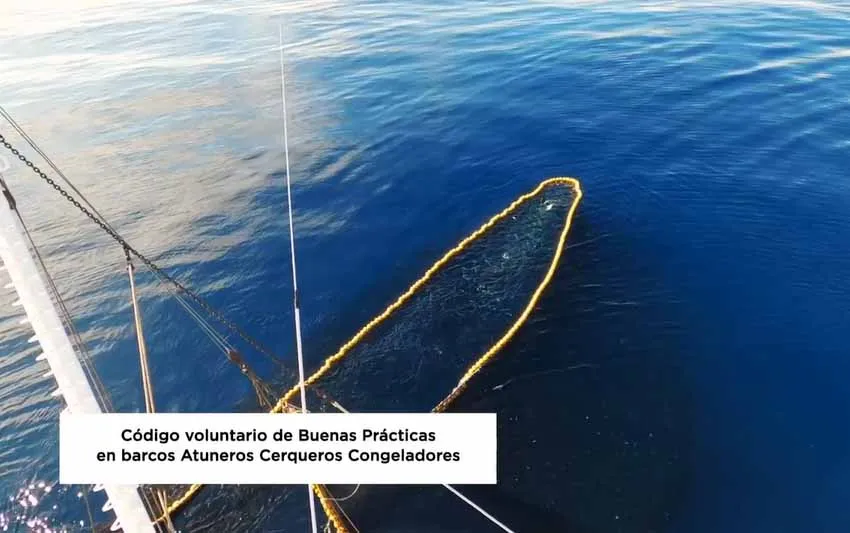
The Spanish freezer tuna fleet has long been recognised for its responsible fishing practices. Back in 2012, OPAGAC and ANABAC voluntarily introduced a Code of Good Practices, which transformed day-to-day operations. Key measures include exclusive use of non-entangling FADs, ongoing onboard training, 100% observer coverage (physical or electronic), and best-practice protocols for releasing sharks, turtles, and rays.
AZTI has served as the fleet’s independent scientific advisor, overseeing compliance and supporting continuous improvements, helping the fleet move towards more selective, low-impact fishing methods.
“These new BRDs are a natural next step in the fleet’s sustainability journey. They are practical tools that make it easier to stick to the high standards the fleet has already committed to,” Murua added.
The study also notes that several Regional Fisheries Management Organisations (RFMOs) are beginning to endorse the use of these devices, which could help drive wider uptake across global purse seine fleets.
Funding for the research came from the Basque Government, the European Union (European Maritime, Fisheries and Aquaculture Fund, Next Generation EU), Spain’s General Secretariat for Fisheries, and the International Seafood Sustainability Foundation (ISSF), among others.
Read the full article here: https://doi.org/10.1093/icesjms/fsaf057