News
Content index
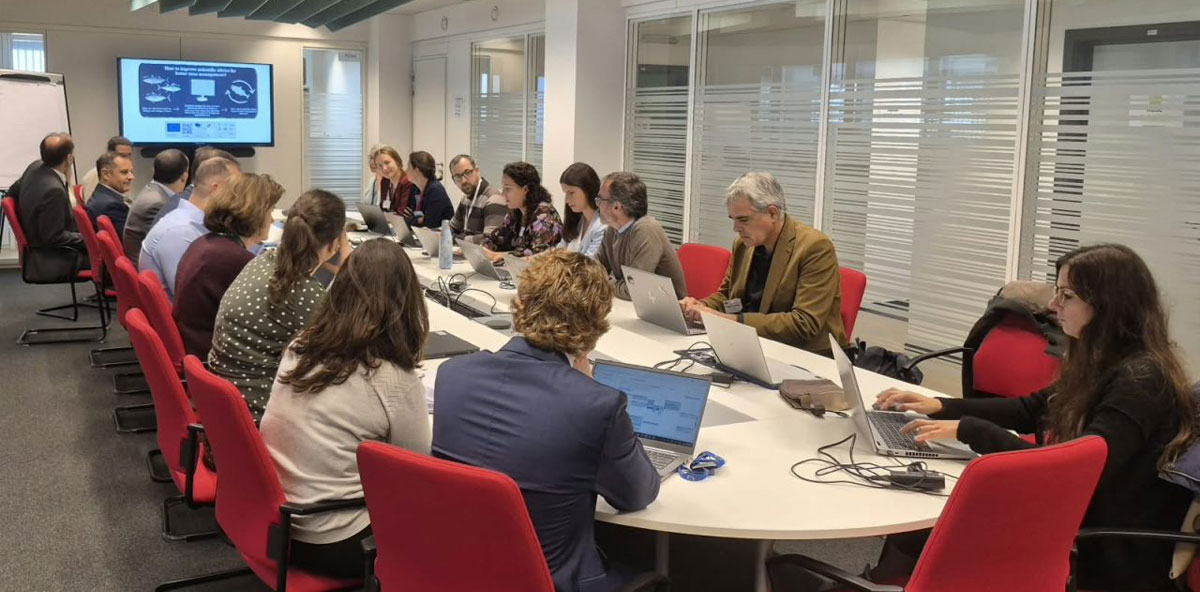
Brussels, 15th October. The project consortium held its final meeting in Brussels on 13 October 2026, bringing together European and international scientific partners and industry representatives to review the project’s achievements and results. On 14 October, ITUNNES’ results and recommendations were presented to representatives of the European Commission, including RFMO’s negotiating and science teams.
The project was also discussed with industry and NGOs stakeholders at the Long Distance Advisory Council (LDAC) in the afternoon.
ITUNNES has established a collaborative biological sampling network involving European and non-European partners, with a focus on yellowfin, skipjack and bigeye tunas. Through standardised protocols and coordinated sampling, the project has generated new information on key biological parameters, including age and growth, reproduction, trophic ecology and population structure.
The project, coordinated by AZTI, has also strengthened scientific capacity and cooperation between researchers and the fishing sector. The development of shared and standardised databases, together with common sampling methodologies, provides a framework for improving the consistency, comparability and accessibility of biological information.
Anne-France Mattlet, Director of Europêche Tuna Group, stated: “ITUNNES demonstrates the value of bringing science, industry and international partners together around common objectives and standardised approaches. The knowledge generated through the project will contribute to strengthening tropical tuna stock assessments and supporting science-based fisheries management.”
ITUNNES contributed to improving the biological information available for tropical tuna stock assessment in the Atlantic and Indian Oceans through coordinated international sampling, standardised protocols, fleet participation, shared databases and visualisation tools. The project has strengthened scientific capacity and the evidence based for scientific assessment and management, while establishing a foundation for sustained biological monitoring in the Atlantic and Indian Oceans.
A key outcome of ITUNNES is the BioTuna Shiny App, developed to facilitate access to and visualisation of the biological information generated by the project. The project has also produced a coordinated sampling strategy and protocol, scientific results, capacity-building activities, communication materials and a policy brief setting out recommendations for future biological data collection.
The results of ITUNNES will contribute to the scientific knowledge supporting tropical tuna assessments within relevant Regional Fisheries Management Organisations (RFMOs), including ICCAT and IOTC.
The project highlights the importance of maintaining long-term biological monitoring, sustaining collaborative sampling networks, strengthening international cooperation, and ensuring harmonised protocols and interoperable data tools. Moving forward, the priorities are to strengthen and sustain biological data collection within existing frameworks, sustain collaborative science–industry sampling networks, promote international cooperation and capacity-building, and foster harmonisation and data interoperability.
These elements will be essential to build on the scientific capacity and knowledge developed through ITUNNES beyond the lifetime of the project.
“The conclusion of ITUNNES is not the end of the collaboration but an opportunity to build on the network, knowledge and tools developed through the project,” Iker Zudaire Balerdi, the project coordinator and AZTI expert in sustainable fisheries management, concluded. “Maintaining this cooperation between scientists, industry and international partners will be essential to ensure that future fisheries management decisions continue to rely on robust and comparable scientific information.”
The ITUNNES project, funded by the European Climate, Infrastructure and Environment Executive Agency (CINEA), is led by AZTI and brings together several European partners: the French Institut for research and sustainable development (IRD), the Spanish Oceanographic Institute (CSIC-IEO), Secretaria Regional Do Mar E Das Pescas Madeira E Açores (DRPM-MADEIRA, DRP-AÇORES, respectively), and Europêche. Both the Centre De Recherches Océanologiques (CRO, Ivory coast), and the International Seafood Sustainability Foundation, INC (ISSF, USA) are associated partners to the project.