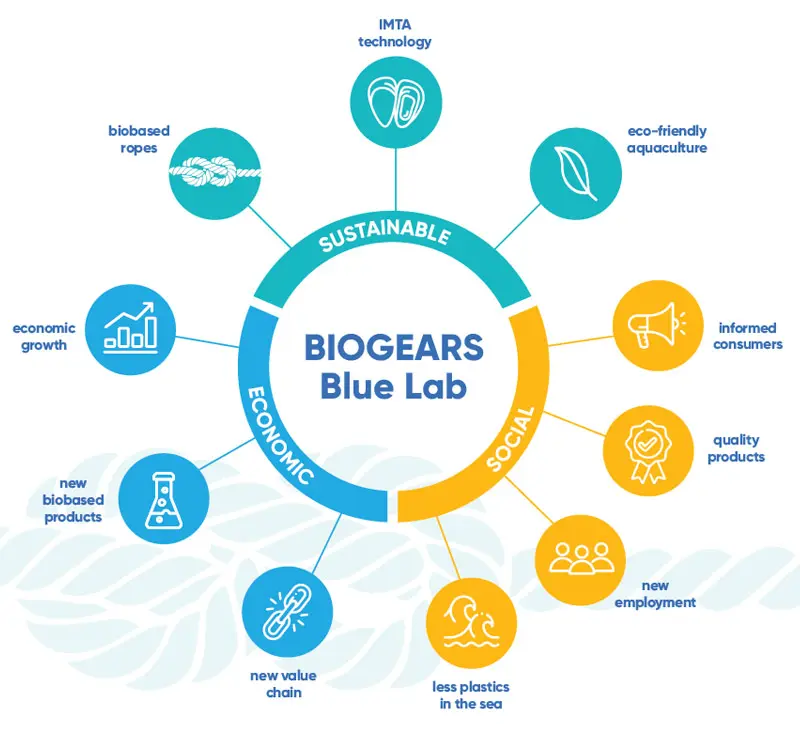
Key results
“Bio” ropes have been developed from biomaterials with the potential to replace conventional plastics of fossil origin in mussel and algae farming. The technical, environmental and economic sustainability analysis of the best performing mussel prototype reduced the carbon footprint by up to 34% compared to conventional plastics.
The Challenge
Aquaculture is an industry that creates economic growth, employment and economic stability, especially in rural areas and along coastal areas in Europe and the European Union is keen on large-scale expansion of aquaculture overall.
Offshore mussel aquaculture has been identified as a promising sector for the expansion and growth of the European aquaculture. However, to date the ropes used in aquaculture are manufactured with petrol based (non-recyclable) plastics, which can potentially contribute to marine litter generation and impact on the marine environment when not disposed of correctly. This needs to be addressed in order to create a more sustainable and eco-friendlier aquaculture sector.
Objectives
BIOGEARS aims to provide the European aquaculture sector with biobased ropes that, though durable and fit-for-purpose, still biodegrade in a shorter time and can be sustainably managed by local composting facilities. The consortium will work together to:
- Develop prototypes of biobased ropes and examine their potential use in mussel and integrated multi-tropic aquaculture (IMTA) production.
- Assess the sustainability of the biobased rope prototypes, conducting technical, economic and environmental analysis of their performance in sea tests, to select the best to procced with.
- Create a Blue Lab to track innovation in the development of biobased ropes for local aquaculture and define actions for replicability in order to scale up.
- Collaborate with wider research on the use of plastics in the sea, mussel culture and IMTA (mussel and seaweed) to provide feedback on policy and legislation.
- Disseminate the outcomes of the project to the general public and other stakeholders, including academia, industry and end-users to ensure wide uptake of the new solutions.
Expected Results & Impact
- The Blue Lab will develop, by testing at lab and pilot scale, new innovative products in combination such as biocompounds, biobased ropes, new production systems such as IMTA and marketable seafood products (mussels and seaweed).
- The project, though focusing on the Atlantic area, aims to scale up the product to Mediterranean conditions and species and provide the European aquaculture sector with innovative products and a value chain to challenge the existing gap of biobased ropes.
- BIOGEARS will foster an eco-friendly aquaculture industry with the results of the project creating a biobased value chain under the EU Bioeconomy Strategy framework and contribute to the development and implementation of European policies on microplastics.
- The project will develop new business models for new bio-materials and ropes generated within the project and study new market opportunities for these products.