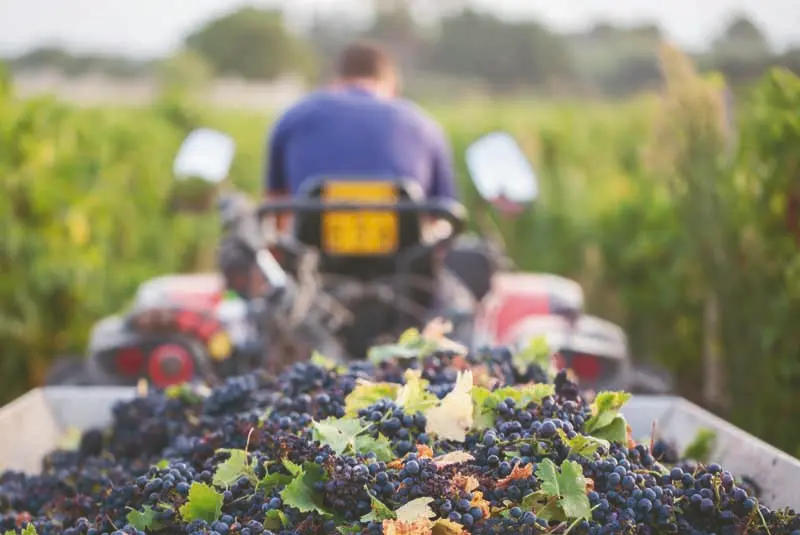
Destilerías y Biorefinerías Zambrana, in collaboration with the team of technicians from the AZTI, has successfully completed the ALCUVA project. This project, which aims to make use of grape stalks, focuses on the production of bioethanol and obtaining a high quality ingredient for animal feed.
The research was carried out between September 2022 and December 2023 within the framework of the Programme of Aid for Innovation Projects in the Bioeconomy, established by Order of 31 August 2022 of the Department of Economic Development, Sustainability and the Environment of the Basque Government, with a grant of €105,957.5.
Grape stalks, the only by-product of the wine industry that has not yet been revalued, are mainly used as biomass, either as an organic amendment or as a fuel. With the aim of changing this paradigm, Destilerías y Biorefinerías Zambrana has carried out an exhaustive study in three phases:
In the first phase, a process was developed to extract sugars from the stalk to produce bioethanol. A milling and washing process was optimised to maximise sugar extraction, resulting in a concentrated product that serves as the basis for bioethanol production through fermentation and distillation.
The second phase involved the development of a process to stabilise washed scrapings for use as a feed ingredient. The scrapings, once deprived of sugars, are dried for use as a feed ingredient, preserving the nutritionally interesting compounds. The result is an ingredient with polyphenols that are beneficial for animal nutrition due to their bioactivity and positive effect on animal metabolism.
The third phase focused on optimising stalk collection using an intelligent solution with LiDAR sensors. This solution, integrated with an IoT platform, monitors stalk collection in the warehouse, improving logistics and avoiding stalk degradation, thus preserving its potential as a raw material.
This project has revealed a potential production of more than 200 tonnes of bioethanol per year using the stalks produced in the Rioja Alavesa region. This project represents an important milestone in the regional bio-economy.