News
Content index
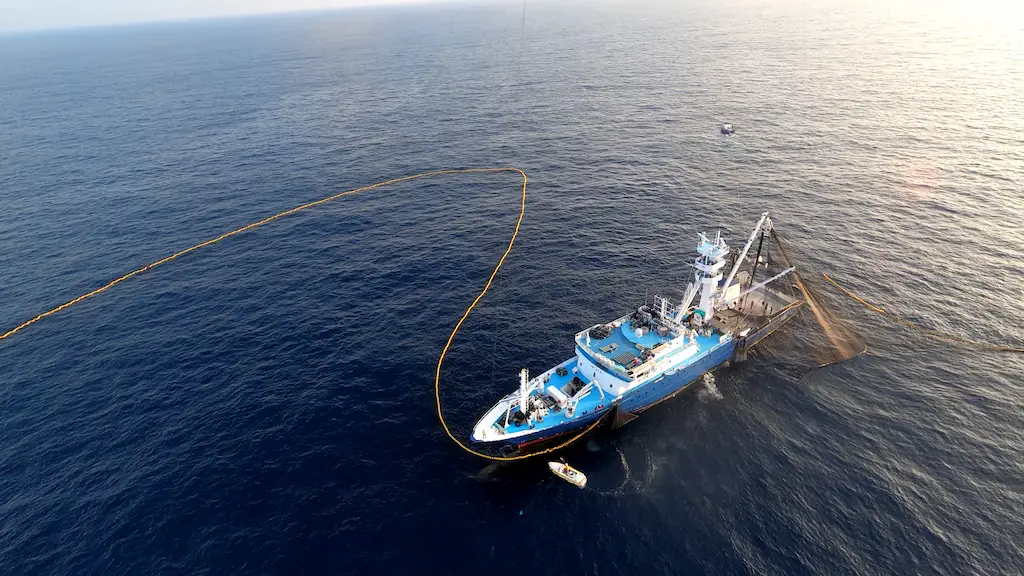
Sukarrieta, 5 May 2025. AZTI has developed an innovative real-time monitoring system capable of reconstructing with high accuracy the geometry of purse seine nets as they are deployed in the water. The technology is based on a network of sensors mounted directly on the fishing gear, both below the surface and on the float line, capable of transmitting their positions in real time. This enables the reconstruction in three dimensions of how the net is evolving during the deployment, in turn allowing the display of this information live to the skipper on the bridge.
Thanks to advanced 3D mesh reconstruction algorithms, the system provides fishermen, for the first time, with a dynamic and accurate representation of the actual behaviour of the gear beneath the surface—something that has so far been impossible under real fishing conditions.
The solution represents a significant step forward for the fishing sector by reducing the risk of gear damage, enhancing crew safety and contributing to more efficient and sustainable fishing operations.
In purse seine fishing, the shooting and hauling of the net take place under zero visibility below the waterline. Factors such as subsurface currents, gear deformation or incorrect manoeuvres can lead to costly net damage, loss of catch or hazardous situations for the crew, with the skipper relying largely on experience and intuition rather than precise information to anticipate them.
The system developed by AZTI addresses this challenge by placing sensors along the net— on the float line and at key points on the gear—which continuously transmit their synchronised position to the onboard processing system. Using this data, the algorithm reconstruct the net’s three-dimensional shape in real time and present it to the skipper through a clear and intuitive visual interface, enabling informed decision-making throughout the manoeuvre.
With this information, the skipper can adjust shooting speed, alter the vessel’s course or, if necessary, abort the operation before damage occurs.
“Preventing even a single net failure can represent very significant savings for the vessel owner, both in terms of gear value and the downtime and fuel consumption associated with a failed operation and the need to return to port for repair or replacement,” explains Iñaki Quincoces, AZTI expert in fisheries technology digitalisation.
Beyond damage prevention, the technology directly improves fishing performance. Accurately knowing the position of the net during purse closure allows for better control of the operation, reduces fish escape and increases the effectiveness of each fishing manoeuvre.
In the future, the system could be integrated with sonar data used by these vessels to locate fish schools, opening the door to smarter operational management. In this respect, AZTI’s innovation aligns with European objectives for the digitalisation of the fishing sector and improved environmental sustainability.
Although initially developed for purse seine fisheries, AZTI highlights its potential across other areas of the maritime sector. The system could be applied to aquaculture cages, submerged structures, live tuna transport cages or other fishing gears where controlling underwater geometry is critical.
“This technology opens up new possibilities for monitoring flexible structures in complex marine environments, where visibility is limited and conditions are constantly changing,” notes Quincoces.
Beyond decision support, AZTI is already looking towards a more ambitious evolution of the system: intelligent automation of the fishing set., The system could integrate the three-dimensional net data with sonar information on fish school location, enabling artificial intelligence to combine both data sources and execute or guide the set autonomously.
In such a scenario—where AI simultaneously knows the position of the fish and the net in the water—the door would open to a radically more efficient and precise purse seine fishery: better-executed sets, higher success rates and a significant reduction in fishing effort to achieve the same yield.
This would mark a decisive step towards automating one of the most complex and demanding operations in commercial fishing, with direct implications for vessel profitability and the sustainability of the activity.