Problem addressed
Access to high-resolution, real-time ocean data remains a challenge for research, coastal management, navigation, and fisheries. The lack of detailed observations limits the ability to anticipate extreme events, design climate change adaptation strategies, plan offshore renewable energy developments, or manage fisheries sustainably.
What we do and how we do it
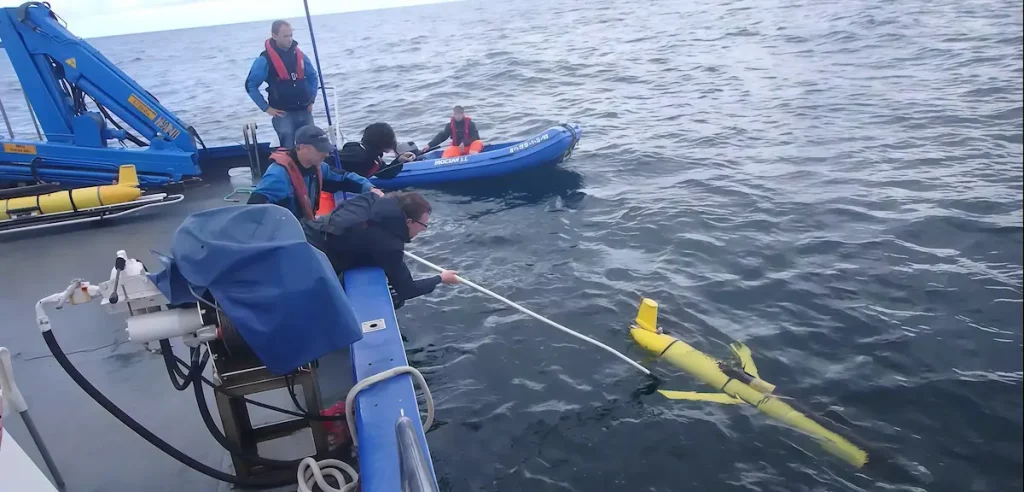
- We manage Pasaia Ocean Autonomy, the first scientific infrastructure in Spain dedicated to the deployment and operation of gliders, serving both the research community and industry.
- We operate gliders and autonomous surface vehicles equipped with advanced sensors to measure temperature, salinity, streams, dissolved oxygen, nutrients, and biogeochemical variables.
- We integrate the collected information into the EUSKOOS network and international platforms such as the Copernicus Marine Service and EMODnet, ensuring open access and data standardisation.
- We develop tailored applications for fisheries (habitat and migration prediction), offshore renewable energy (site characterisation), and maritime safety (early risk detection).
- We collaborate with scientific and technological partners—including EuroGOOS, European universities, technology centres, and energy companies—to expand the scope and validation of our solutions.
Key benefits
- Exclusive high spatial and temporal resolution data on the marine environment.
- Enhanced predictive capacity to anticipate risks and optimise marine activities.
- Access to a European observation network, ensuring data quality, standardisation, and international visibility.
- Direct support for strategic sectors such as fisheries, ports, renewable energy, and coastal planning.
- AZTI’s scientific and technological leadership, recognised as a key partner in European ocean observation projects.