Project

SEA2LAND

Producing advanced bio-based fertilizers from fisheries wastes.

TerritoryEuropean
Funder:European Union
Duration2021-2025
StatusCompleted

SEA2LAND aims to provide solutions to help overcome challenges related to food production, climate change and waste reuse.

Actions

The project will meet this challenge by

Methodology

The basis of the project is the regional production of BBFs developing demonstration pilots that can be replicated throughout Europe, boosting local growth.

The project proposes the implementation of 9 technologies in 7 cases in 6 areas representative of the fisheries sector (North, Baltic, Atlantic, Cantabric, Mediterranean, Adriatic Sea). The proposed technologies range from well-known processes (bokashi, composting, etc.) that can be a solution in some areas due to its low cost and simplicity to others more sophisticated that go from thermo-mechanical fractionation to enzymatic hydrolysis.

The technologies will be applied to different by-products (typical in each implementation area), and they will produce several BBFs either for local crops and conditions, and others for exporting (with high value and effectiveness to assure a low impact).

Main Benefits

BBFs will be characterized to ensure compliance with EU regulations, including those related to organic farming. Besides, the effects on soil biodiversity, environmental sustainability and the impact on social parameters and local economy will be studied and business plans will be defined. Finally BBFs from by-products will serve to partially replace imported nutrients for agriculture in Europe, contributing to reduce the negative environmental effects of the misuse of by-products.

Datos del proyecto

Socios AZTI (España), NEIKER (Coordinador del proyecto, España), BARNA SA (España), NutriLoop (Estonia), CAVIAR PIRINEA (España), CATAR CRITT Agroressources (Francia), UNIVERSITA POLITECNICA DELLE MARCHE (Italia), AQUABIOTECH (Malta), FUNDACIO UNIVERSITARIA BALMES (España), FERTINAGRO BIOTECH (España), Grønn gjødsel (Noruega), NIBIO – NORSK INSTITUTT FOR BIOOKONOMI (Noruega), INSTITUTO DE SOLDADURA E QUALIDADE (Portugal), INSTITUT NATIONAL POLYTECHNIQUE DE TOULOUSE (Francia), UNIVERSITEIT GENT (Bélgica), EESTI TAIMEKASVATUSE INSTITUUT (Estonia), UNIVERSITA DEGLI STUDI DI MILANO (Italia), Chambre d’agriculture des Pyrénées Atlantiques (Francia), FiBL -FORSCHUNGSINSTITUT FUR BIOLOGISCHEN LANDBAU STIFTUNG (Suiza), UNIVERSITE DE LIEGE (Bélgica), Norsk Landbruksrådgiving (Noruega), Instituto de Investigaciones Agropecuarias (Chile), INICIATIVAS INNOVADORAS SAL (España), FIBL EUROPE – FORSCHUNGSINSTITUTFUR BIOLOGISCHEN LANDBAU IN EUROPA (Bélgica), IPS KONZALTING DOO ZA POSLOVNE USLUGE (Croacia), SOCIETA COOPERATIVA PESCATORI MOLLUSCHICOLTORI – CO.PE.MO. (Italia)
Financiación Comisión Europea (Investigación e Innovación)
Más información sea2landproject.eu
Duración 2020-2024

Related application sectors, research lines and sublines

Sectors: Fisheries and aquaculture sector, Ingredients industry

Research lines: Circular economy, Food sustainability and eco-efficiency

Research sublines: New sources of proteins and bioproducts

Research team

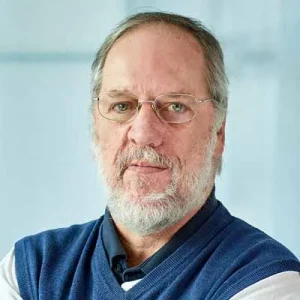
Carlos Bald

Carlos Bald
Principal researcher (PhD)

Contact
Cookies