Reducing food waste is essential. According to Eurostat data, around 57 million tonnes of food waste (127 kg per inhabitant) is annually generated in the European Union with an associated market value estimated at €130 billion.
And beyond the economic cost, we have to add the environmental cost of food production, as food production generates one third of global greenhouse gas emissions.
While most waste (53% according to some studies) happens in households, the food industry can (and should) make every effort to reduce and make the most of its production processes. In this sense, circular economy initiatives are becoming increasingly common and the use of by-products has become a solution with great potential.
How can waste be used to produce valuable ingredients, what are the requirements for using such waste, and how can these processes be carried out as sustainably as possible?
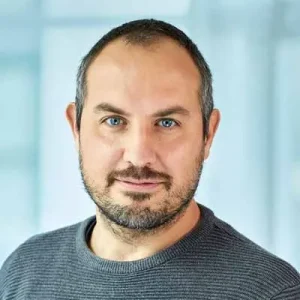
The answer lies in science and today we are looking for it with David San Martín, researcher in the area of efficient and sustainable processes and expert in the valorisation of by-products (podcast in Spanish).