The oceans regulate the climate, produce a significant share of the oxygen we breathe, and support essential activities related to food, energy and the global economy. But this system, which is vital for life on Earth, is under growing pressure: rising water temperatures, acidification, biodiversity loss, pollution and overexploitation of resources are disrupting its balance.
At the same time, a key question is becoming increasingly urgent: how can we continue to develop sea-related economic activity without worsening the decline of marine ecosystems? This is where the blue economy becomes especially relevant. More than just a label, it is an approach that seeks to reconcile economic development, scientific knowledge and environmental sustainability in the oceans and coastal areas.
The starting point is clear: there can be no lasting prosperity linked to the sea if the ocean itself loses its ability to sustain life, resources and ecosystem services. That is why the blue economy is not simply about making better use of the marine environment’s potential, but about doing so within the ecological limits that ensure its long-term resilience.
With this logic, the blue economy is becoming an increasingly important framework for coastal regions that need to transform their economic fabric, strengthen their capacity for innovation and, at the same time, respond to some of the major environmental challenges of the 21st century.
Within this context, AZTI plays a role that goes beyond generating scientific knowledge. We aim to turn that knowledge into projects, partnerships, technological capabilities and concrete opportunities for application. In other words, we work to translate the blue economy into real solutions: from new tools and services to business models, collaborative dynamics and transfer processes that bring innovation into the business sector and society.
This role is especially important at a time when the sustainability of the marine environment can no longer be seen as a barrier to economic activity, but rather as the condition that makes it possible. Promoting new sea-related developments requires conserving ecosystems, improving energy efficiency, using resources responsibly and strengthening the resilience of coastal regions. From this perspective, AZTI helps drive a blue economy based on the practical application of knowledge, cooperation among stakeholders, and the creation of lasting economic and social value.
A New Paradigm for Sea-Based Economic Development
The blue economy encompasses all economic activities linked to the oceans, seas and coastal areas that aim to generate prosperity and social well-being without damaging the health of marine ecosystems.
The idea is simple, yet deeply transformative: long-term economic prosperity depends on a healthy ocean.
To make this possible, the model is built on three fundamental pillars.
The first is environmental sustainability, which means managing marine resources responsibly and protecting ocean biodiversity. The second is scientific and technological innovation, which makes it possible to develop new solutions to make better, more efficient and more environmentally responsible use of the sea’s potential. The third is collaborative governance, based on cooperation between public authorities, businesses, research centres and society.
From this perspective, the ocean is no longer seen only as a natural space that must be protected. It also becomes a laboratory for innovation and a driver of sustainable economic development.
Sectors Driving the Blue Economy
One of the most distinctive features of the blue economy is the convergence between traditional sea-related sectors and new activities based on scientific knowledge and technology. This combination is creating opportunities for economic diversification and territorial development.
Among the most important sectors are sustainable fisheries and aquaculture, marine renewable energy, marine biotechnology, responsible coastal tourism, and the growing field of ocean technology and digitalisation.
Fisheries and aquaculture, which have long been pillars of many coastal economies, now face the challenge of ensuring the responsible use of marine resources. Better fisheries stock management, the development of more efficient aquaculture production systems, and innovation in fishing techniques are all helping to drive a transition towards more sustainable models.
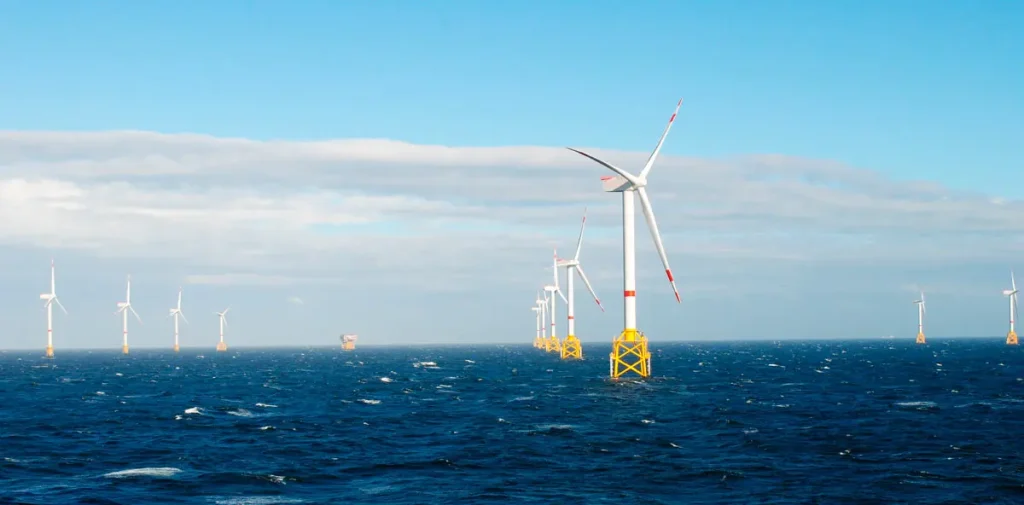
At the same time, the ocean is emerging as a strategic source of clean energy. Technologies such as floating offshore wind, wave energy and tidal power are playing an increasingly important role in the global energy transition. In addition to supporting decarbonisation, these solutions are creating new industrial value chains linked to marine engineering and technological development.
Another field with enormous potential is marine biotechnology. Organisms living in the oceans contain compounds with applications in health, food, cosmetics and new biomaterials. Research in this area is making it possible to develop innovative ingredients and solutions based on marine biodiversity.
Coastal tourism, one of the most important economic sectors for many regions, is also part of the blue economy. The challenge is to promote responsible tourism models that protect marine ecosystems and natural heritage while generating economic opportunities for local communities.
Finally, our understanding of the ocean is being transformed by technology. Oceanographic sensors, satellites, artificial intelligence and big data analysis make it possible to monitor marine ecosystems, anticipate risks and improve the management of natural resources. This digitalisation is giving rise to new services and solutions for ocean observation and management.
The Challenges of a Sustainable Blue Economy
Despite its enormous potential, the development of the blue economy is not without challenges. Pressure on marine ecosystems, the impacts of climate change and growing technological competition all make it necessary to move towards increasingly sustainable and innovative production models.
One of the most urgent challenges is adaptation to climate change. Coastal areas are particularly vulnerable to phenomena such as sea-level rise, coastal erosion and ocean acidification. Developing adaptation and resilience strategies is essential to protect both ecosystems and the economic activities that depend on them.
Another major challenge is the digitalisation of the maritime sector. Digital technologies can improve the efficiency, traceability and sustainability of many marine activities, but their implementation requires adequate infrastructure, specialised training and shared technological standards.
At the same time, emerging sectors such as offshore energy, marine biotechnology and underwater robotics are evolving rapidly. Remaining competitive in these fields requires stronger research, technological development and knowledge transfer to the business sector.
Added to this is the need to advance maritime spatial planning. The ocean supports multiple uses — fishing, transport, energy, conservation and tourism — and these must be managed in a balanced way through integrated governance models.
Innovation and Collaboration: Key Drivers of Territorial Development
The blue economy not only opens up new sectoral opportunities. It also fosters the creation of innovation ecosystems around marine and maritime knowledge, where science, business and public authorities work together to develop solutions with a real territorial impact.
One example of this approach is the Oarsoaldea Blue Economy Hub (Oarsoaldea Urdina Poloa), an initiative designed to boost the economic and technological development linked to the sea in this region.
This hub serves as a meeting point for businesses, research centres and public institutions, helping to promote transformative projects in strategic areas of the blue economy.
Its main lines of work include oceanographic research and ocean monitoring, conservation of marine resources and sustainable fisheries management, the circular economy applied to marine waste, and the development of solutions for maritime safety and resilience.
The hub also promotes projects linked to transport and naval technology, sustainable port infrastructure, marine renewable energy and responsible maritime tourism.
Initiatives like this show that the blue economy can become a powerful tool for generating skilled employment, technological innovation and territorial development, while also helping to protect the marine environment.
The Role of Science in the Blue Economy
The transition towards a sustainable blue economy is only possible if it is built on a strong scientific and technological foundation. Understanding how marine ecosystems function, developing new technologies and assessing the impact of human activities on the ocean are essential steps for informed decision-making.
In this process, research centres specialising in marine sciences play a fundamental role. Their work makes it possible to generate scientific knowledge, develop innovative solutions and transfer technology to the productive sector.
Through research projects, ocean observation platforms, technological development and collaboration with businesses and institutions, science helps turn ocean challenges into opportunities for society.
A future built from the ocean
The oceans cover more than 70% of the planet’s surface and play a key role in climate balance, biodiversity and food security. Their protection and sustainable management have therefore become a global priority.
The blue economy proposes exactly that: a development model capable of integrating innovation, sustainability and economic progress.
At a time when the relationship between humanity and the ocean is changing, moving towards this approach is not just an opportunity for coastal regions. Above all, it is a necessary condition for safeguarding the future of the seas and of the societies that depend on them.