Although relatively rare, listeriosis remains one of the foodborne diseases with the greatest public health impact in Europe. According to the latest EFSA–ECDC report, 3,041 cases of listeriosis were reported in Europe in 2024, with more than 70% resulting in hospitalisation and a mortality rate exceeding 8%. These figures remind us that simply “complying” with regulations is not enough; anticipating risk is essential—especially when dealing with Listeria monocytogenes, a pathogen capable of persisting in cold, humid environments and surviving for long periods in processing facilities, even under high hygiene standards.
The upward trend in Listeria-related outbreaks over the past five years can be explained by a combination of demographic, environmental, and consumer behaviour factors. Among these, the growing demand for ready-to-eat (RTE) foods stands out. These products are particularly relevant in the case of Listeria monocytogenes, as they are consumed without prior cooking or heat treatment. RTE foods include a wide range of dairy, meat, seafood, and plant-based products in which, even with effective controls in place, samples exceeding the 100 CFU/g limit have been detected—highlighting the need for complementary prevention and control solutions across different sectors of the food industry.
Bacteriophages: Natural Precision Backed by Evidence
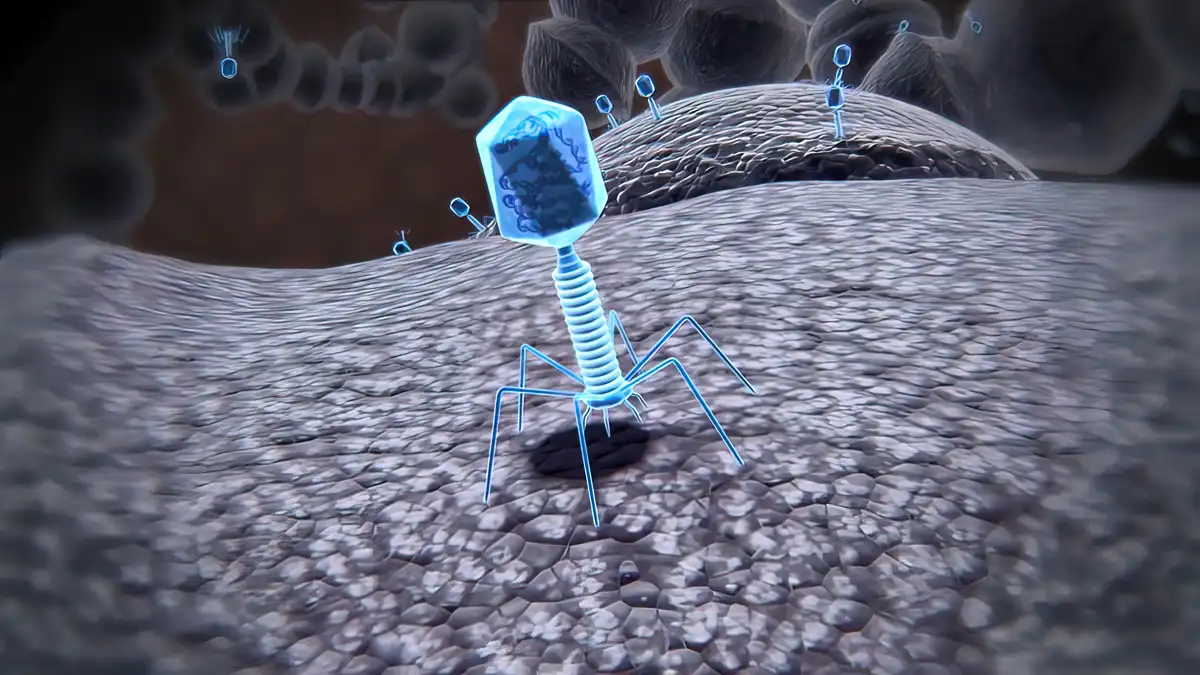
In this context, science has long been exploring complementary solutions to traditional microbiological control strategies. One of the most promising is the use of bacteriophages, or phages—natural viruses that infect only specific bacteria.
Phages occur naturally in the environment, in foods themselves, and even in our gut microbiota.
Their main advantage lies in their extremely high specificity, enabling highly targeted action against the pathogen of interest—in this case Listeria monocytogenes—without affecting the food microbiota (including beneficial microorganisms) or its sensory properties. Moreover, their mode of action is both effective and natural: the phage recognises the bacterium, enters it, replicates, and causes its destruction, repeating the cycle as long as Listeria is present.
Technology Maturity and Application
At AZTI, we have been working for over a decade on the development of bacteriophages specific to Listeria, with potential applications at different points along the food chain: directly in foods, in targeted disinfection to combat biofilm formation on surfaces and processing equipment, and even in active packaging solutions. These approaches are designed as complementary tools to good hygiene practices, aimed at reinforcing Listeria control at critical points in the chain—particularly in ready-to-eat foods.
This work has led to a patent—“Specific bacteriophages against Listeria monocytogenes” (WO/2024/133422 (PCT) | EP4388888A1)—based on a natural biotechnological formulation composed of one to six highly specific phages, designed to reduce the presence of this pathogen in foods and processing environments, thereby strengthening food safety.
A One Health Approach (One Health at AZTI)
The One Health approach recognises the interconnection between human, animal, and environmental health and promotes integrated prevention strategies across the entire agri-food chain. In this context, phages fit well as natural and sustainable solutions, with the potential to complement existing microbiological control strategies, reduce the need for antimicrobials and certain chemical preservatives— increasingly rejected by consumers—and support the fight against antimicrobial resistance. At AZTI, this line of work is part of our One Health strategy for microorganism control throughout the agri-food chain.
A clear example is the strategic project BIOTEGANIA (Ref. PLEC2023-010275 funded by MCIU/AEI /10.13039/501100011033; Ref. MIG-20232001 funded by CDTI), launched in 2024 and coordinated by AZTI and CUARTE. The project advances biotechnological and digital solutions to improve animal health and food safety, with the ultimate goal of reducing antibiotic dependence and minimising the risk of pathogen transmission. It focuses on developing innovative tools for the diagnosis, prevention, and control of pathogens (e.g. Campylobacter, Listeria, Escherichia coli), and also addresses the challenge of isolating active phages against Brachyspira. The formulations are designed for application at farm level (water, feed, food), in slaughterhouses, and during processing, with validation under real conditions alongside industrial partners.
What Does the Industry Gain?
- Enhanced safety in ready-to-eat foods and processing environments, reinforcing existing hygiene and preservation systems
- Reduced risk of alerts and recalls, along with associated economic and reputational costs
- Natural, specific, and sustainable solutions
Looking Ahead: The Future of Food Safety
Food safety evolves alongside society, demographic changes, and consumption habits increasingly oriented towards ready-to-eat products. This requires more precise and adapted control strategies. When dealing with low-frequency but high-impact pathogens, science-based innovation is key.
Bacteriophages do not replace good hygiene practices, but they can become strategic allies in anticipating risks and protecting consumers—especially the most vulnerable—in an increasingly complex and demanding food system.
At AZTI, we continue to advance in this field and collaborate with the agri-food industry to analyse and validate the potential of these solutions across different applications, from the laboratory to pre-industrial settings.
If you are responsible for quality or food safety and would like more information or to explore potential collaboration opportunities, please feel free to contact us.
References