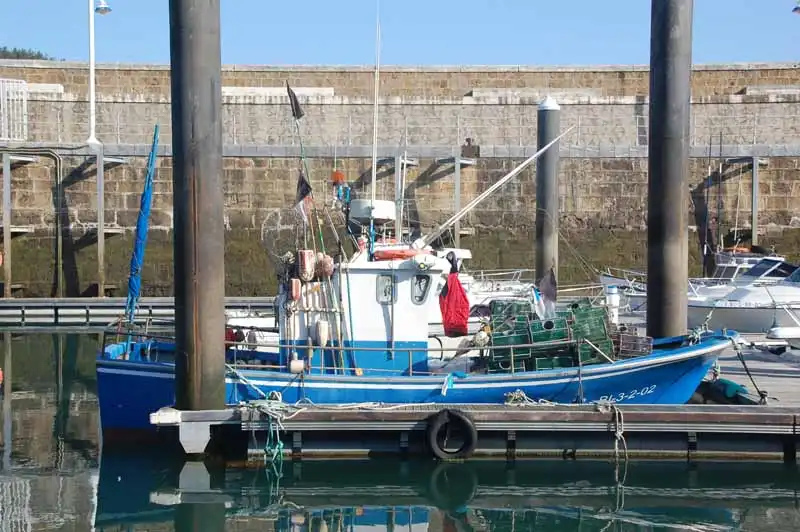
We provide a comprehensive service to improve the sustainability of small-scale fisheries*, delivering scientific knowledge and tools tailored to their scale. Our approach integrates environmental sustainability, blue growth (economic sustainability), and social growth (social sustainability).
Small-scale fisheries* face challenges such as low profitability, limited visibility in management policies, and generational renewal. They also often lack technological tools and specific data to support effective management.
This type of fishing has economic and socio-cultural value that goes beyond its traditional role as a food source: it represents cultural and spiritual values and is considered a traditional way of life. However, data documenting the cultural heritage associated with these vessels are rarely available.
At the same time, environmental pressure on the marine environment cannot be attributed solely to large vessels. All coastal and maritime activities generate impacts, and small-scale fisheries (SSF) are no exception. From a global perspective, SSF also contribute to climate change through their carbon footprint.
One of the main challenges remains the real-time monitoring of fishing effort.
* Although not exactly the same, they are also referred to as artisan fisheries. In the European Union (EU), SSF are defined as vessels under 12 metres in length that do not use towed gear but rather fixed gear. At AZTI, we extend this scope and also work with vessels of up to 18 metres.
Sectors: Fisheries and aquaculture sector
Research lines: Blue Economy, Efficient, sustainable fisheries and aquaculture
Research sublines: Sustainable fishery management