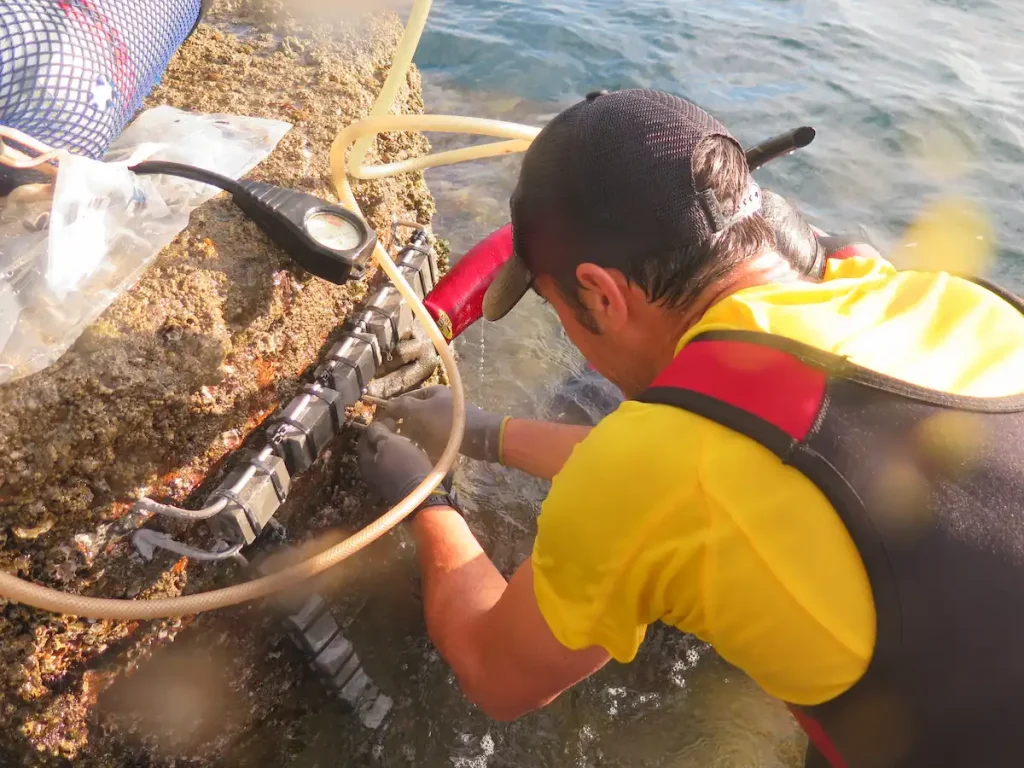
AZTI validates antifouling materials and treatments through testing under real marine conditions (sheltered harbour areas and exposed coastal sites), at different immersion levels (splash zone, 4 m and 20 m). This approach combines microfouling analysis using metagenetic techniques with macrofouling inspections (coverage, biomass, imaging and taxonomic analysis).
Biofouling, or the accumulation of biological growth on marine structures, increases operational costs, reduces functional efficiency, and can affect the environmental performance of infrastructure (e.g. corrosion processes or the ecological impact of inappropriate biocides). Materials that perform well under laboratory conditions may fail when exposed to real, dynamic environments, such as fluctuations in salinity, light, temperature and wave action. Companies and facilities require reliable real-world data to select effective treatments that are environmentally safe and tailored to their specific applications.
Sectors: Maritime and port infrastructure, Offshore sector
Research lines: Blue Economy, Environmental management of seas and coasts, Environmental resilience and global change
Research sublines: Impact and environmental vigilance in the marine environment