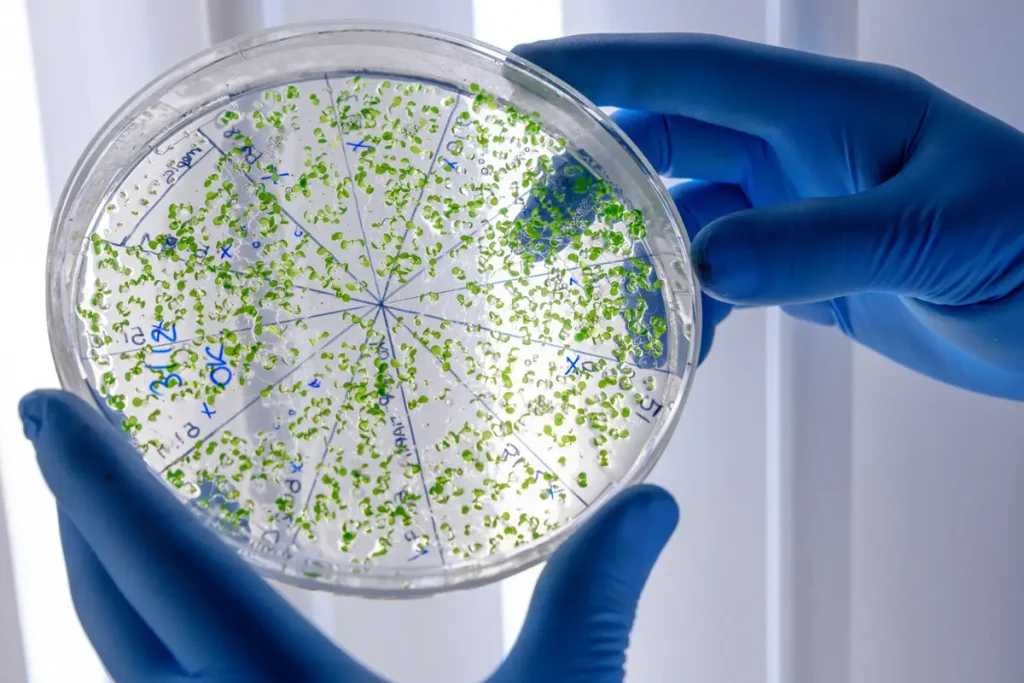
A natural, biotechnology-based solution using bacteriophages (phages) with targeted activity against Campylobacter, designed to reduce the presence of this pathogen in the poultry sector and enhance food safety.
A formulation consisting of highly specific phages targeting Campylobacter jejuni and Campylobacter coli, the main causative agents of campylobacteriosis—the most frequently reported foodborne infection in the European Union.
It reduces the presence of Campylobacter across poultry production, processing environments and final products. It is a natural, precise solution that is compatible with conventional control measures, helping to reduce the use of chemicals and antibiotics while ensuring effective control of this pathogen (including antibiotic-resistant and/or biofilm-forming strains) throughout the entire food chain. It enhances food safety without affecting the animal’s microbiota, the food matrix or the environment, and without altering the product’s sensory properties.
This biocontrol tool is designed for potential use at different points along the poultry value chain: animal production (via feed or water), processing surfaces, or directly on carcasses or foods. The phages recognise Campylobacter cells, inject their genetic material and replicate inside the bacteria. Once the cycle is complete, newly formed phages lyse the bacterium, causing it to die and releasing phages into the environment—where the process is repeated as long as Campylobacter is present.
Sectors: Fisheries and aquaculture sector, Food sector, Ingredients industry, Innovation management
Research lines: Bioeconomy, Biotechnology, Food Quality and Safety, One health
Research sublines: Food biotechnology, Minimising food safety risks