News
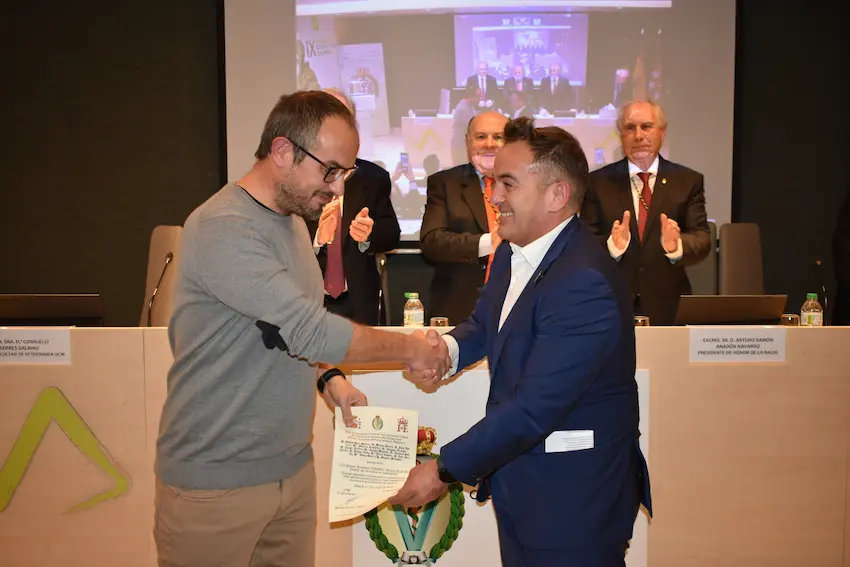
Derio, 13 January 2026. AZTI has been recognised with the 12th CESFAC Foundation “Miguel Ángel Díaz Yubero” Award, in the Nutrition and Sustainability category, for research exploring new ways to valorise agri-food by-products in animal nutrition through a circular economy approach. The award, which is granted on an individual basis, was presented to David San Martín, sustainability expert at AZTI, who submitted the work as part of this call.
The award, granted by the Royal Academy of Veterinary Sciences of Spain and sponsored by the CESFAC Foundation, recognises scientific work with a clear applied focus. In this case, the jury particularly valued the experimental robustness of the study and its usefulness in advancing towards more sustainable food production systems.
The award-winning article, developed by AZTI in collaboration with NEIKER and the Institute of Agrifood Research and Technology (IRTA), analyses three case studies focused on the valorisation of by-products from the coffee, wine, and brewing industries. The aim was to assess whether these materials—traditionally considered waste—could be reincorporated into the food chain as functional ingredients in feed for ruminants, rabbits, and fish.
The results are clear. The analysed by-products can be incorporated into animal diets without negatively affecting productive performance and, in some cases, even improving the quality of the final product. In addition, their content of bioactive compounds provides added benefits related to digestive health and animal welfare.
“This recognition highlights the collective effort and the applied approach of the research, and acknowledges a different way of understanding animal nutrition, where sustainability, health, and efficiency go hand in hand,” explains David San Martín, sustainability expert at AZTI. “It shows that collaboration between research centres and scientific knowledge can deliver real solutions to help the food sector move towards more sustainable models, and that with the right technology, what is considered waste today can become a high-value resource for industry.”
From a sectoral perspective, the study provides valuable evidence to reduce dependence on conventional raw materials, open up new valorisation opportunities for agri-industrial by-products, and move towards more efficient and environmentally responsible production systems, in line with European sustainability and bioeconomy strategies.
With this recognition, AZTI reinforces its commitment to applied research in the service of the food sector, based on collaboration with other leading centres and focused on generating knowledge that can be effectively transferred to industry.