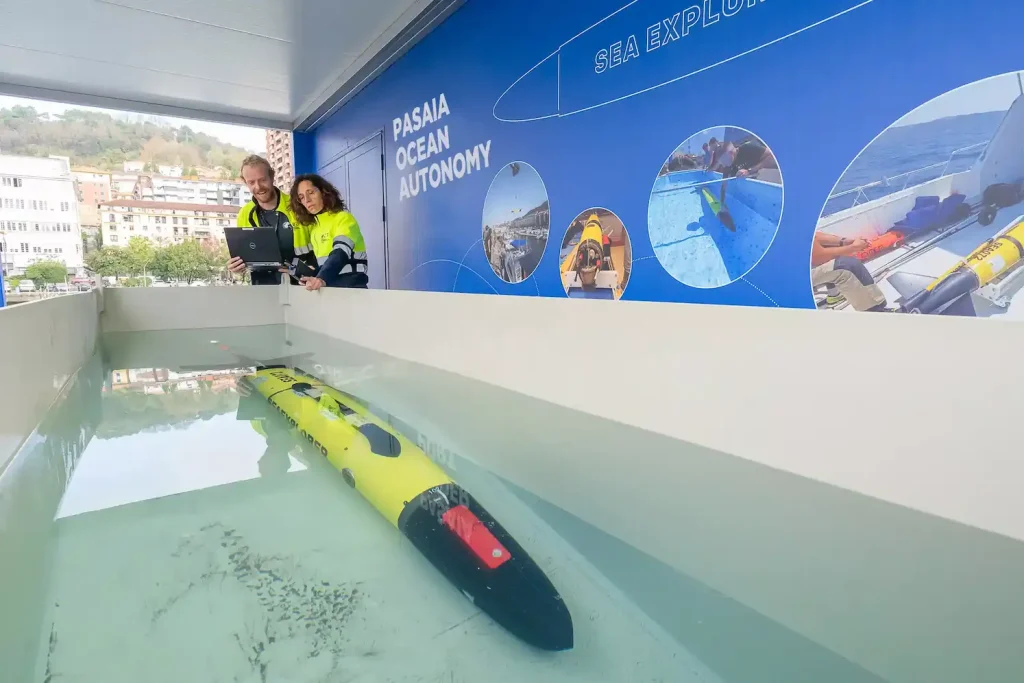
From Pasaia Ocean Autonomy (POA) AZTI operates a fleet of unmanned vehicles —gliders, Itsasdrone and Ranger— designed for remote exploration and environmental monitoring in areas that are difficult to access. These systems allow work to be carried out both on the surface and in the water column, in coastal and oceanic environments, greatly expanding marine observation capabilities with high efficiency and autonomy.
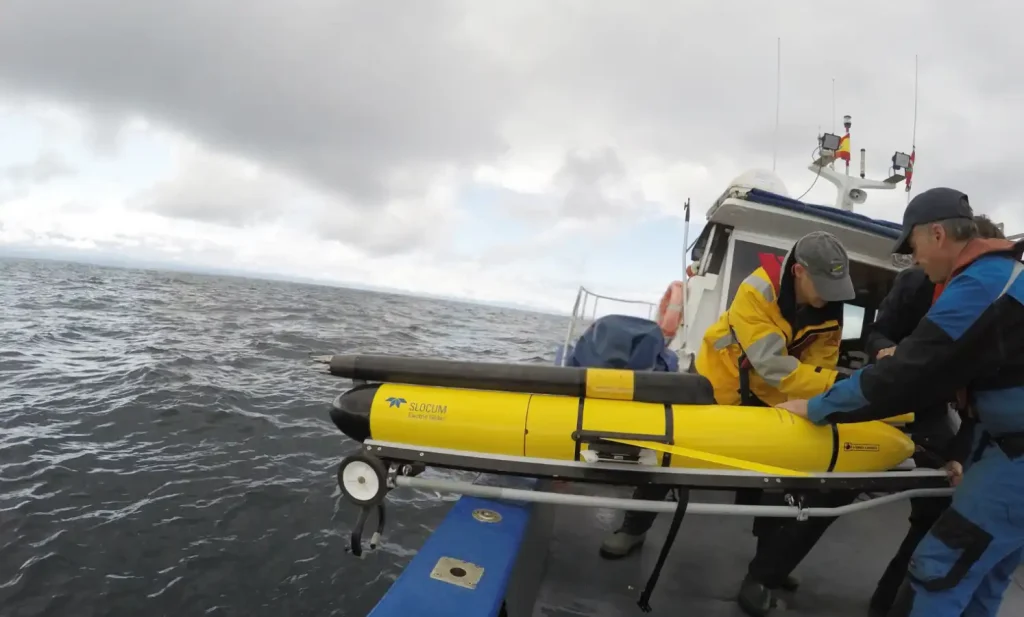
Gliders are autonomous underwater vehicles approximately 3 metres in length, designed for extended missions with ultra-efficient energy consumption. They move by changing their buoyancy and using hydrodynamic wings, which allows them to travel long distances without active propulsion.
Equipped with interchangeable sensors (CTD, echo sounders, biogeochemical sensors), they can operate continuously for weeks, transmitting data in real time. AZTI currently has two gliders in operation.
Main uses:
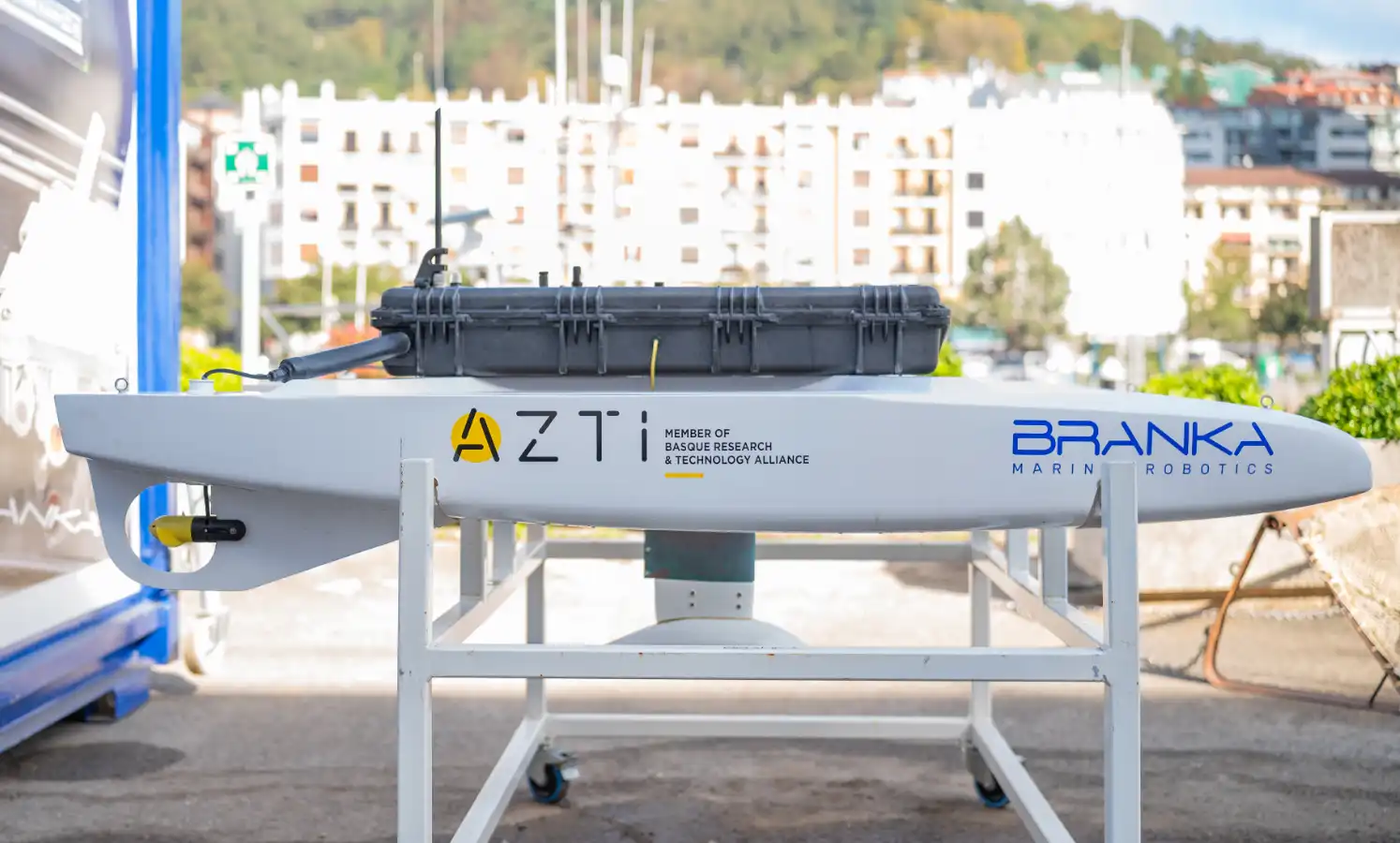
The Itsasdrone is an autonomous surface marine drone (145 cm x 207 cm), powered by solar energy and with zero emissions, developed by Branka with the management and technical advice of AZTI. It is designed to operate continuously for over three months, remote controlled by radio or satellite.
Main uses:
The Ranger 6.0 is an unmanned surface vehicle (length: 5.8 m; beam: 2.0 m), developed by Branka under the technical direction of AZTI. Designed for scientific and security missions, it features advanced sensors and offers a much higher instrument payload capacity than the Itsasdrone.
It is currently equipped with three echo sounders of different frequencies and an ADCP, making it a versatile platform for oceanographic research and environmental monitoring.

Sectors: Fisheries and aquaculture sector, Maritime and port infrastructure, Offshore sector, Technology 4.0
Research lines: Climate change, Efficient, sustainable fisheries and aquaculture, Environmental management of seas and coasts, Operational Oceanography
Research sublines: Adapting to climate change, Aquaculture, Coastal–Ocean Modelling, Fishery technologies, Impact and environmental vigilance in the marine environment, Marine spatial management and planning, Observation and impact of climate change, Real-Time Observation and Monitoring, Sustainable fishery management, Trends and scenarios in climate change