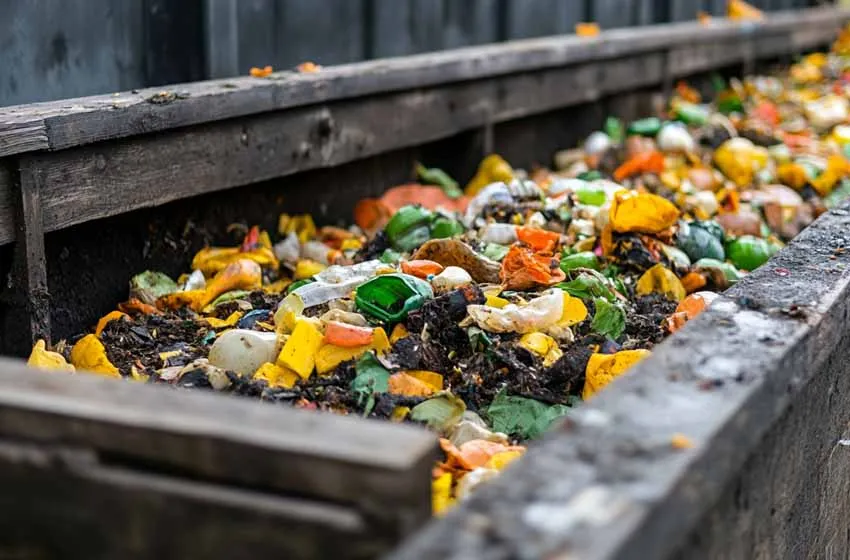
The generation of waste is complex as it relates to all stages of the food value chain. Of the almost 591 million tonnes of food (equivalent to 131 kg per inhabitant) wasted each year in the EU, around 10.4% comes from primary food production (agriculture, livestock, fisheries and aquaculture):
- About 10.4% comes from primary food production (agriculture, livestock, fisheries and aquaculture).
- 20.2% from the manufacture of food products and beverages
- 7.0% from food retailing and other food distribution
- 9% of restaurants and food services
- 53.5% of households.
Environmental aspects of food waste
The impact of food waste on climate change and environmental degradation is a critical issue requiring immediate action. Nearly 59 million tonnes of food is wasted every year in the EU (131 kg/inhabitant), resulting in a huge environmental impact of some 254 million tonnes of CO2 equivalent (16% of the total GHG emissions of the EU food system).
Waste, loss, by-product… What is what? Some important definitions
According to Regulation (EC) No 178/2002 of the European Parliament and of the Council of 28 January 2002 laying down the general principles and requirements of food law, ‘food’ (or ‘foodstuff’) means any substance or product, whether processed, partially processed or unprocessed, intended to be, or reasonably expected to be, ingested by humans. ‘Food’ includes beverages, chewing gum and any substance, including water, intentionally incorporated into food during its manufacture, preparation or treatment.
Directive 2008/98/EC of the European Parliament and of the Council on waste sets out the following definitions:
- Waste: any substance or object which the holder discards or intends or is required to discard;
- Bio-waste: biodegradable garden and park waste, food and kitchen waste from households, restaurants, catering and retail outlets, and comparable waste from food processing plants;
- By-product (co-product): a material, substance or object resulting from a production process, the primary purpose of which is not the production of that material, substance or object.
Finally, according to the Food and Agriculture Organisation of the United Nations (FAO), the term food waste is divided into two different concepts: food loss and food waste. Both food loss and food waste refer only to the edible (or potentially edible) part of the food.
- Food losses are those occurring in the first stages of the agri-food chain: production and manufacturing sectors, including harvesting, processing and storage of food. The causes of food losses would be: climatic and environmental processes, accidental causes (associated with the technologies and infrastructures used) or economic and legislative causes (quality and aesthetic standards).
- Food waste would be that which takes place in the final stages of the chain: distribution and consumption. The causes of wastage are mainly the decisions of the agents involved.
Reducing food waste in European legislation
The objective of reducing food waste is in line with the scope of the European Green Pact aimed at achieving a climate-neutral European Union by 2050. Preventing/reducing food waste is a crucial step towards mitigating and adapting to climate change, reducing pollution, improving air quality and preserving biodiversity. In addition, it maximises the reduction of greenhouse gas emissions by contributing to the main challenge of the 2030 Climate Target Plan to reduce them by at least 55% below 1990 levels by 2030.
In this sense, combating food waste contributes to the objectives of, among others, the following EU initiatives:
Solving the challenge
Food waste in the European Union represents a significant challenge affecting both environmental sustainability and economic stability and social equity. Alarming waste figures at all stages of the value chain, from production to household consumption, underline the need for urgent and coordinated action to reduce this problem. In addition to reducing the volume of waste, it is crucial to develop solutions for the valorisation of by-products arising during food production.
The valorisation of by-products offers an opportunity to transform what was previously considered waste into valuable resources, either by reusing them in other production processes, converting them into biofuels or using them in the fertiliser and animal feed industry.