Blog
4 answers to know everything about microplastics
Autor/a: Izaskun Zorita. Senior researcher (PhD)
Content index
Microplastic was the term chosen by the Fundación del Español Urgente (Fundéu BBVA) as the word of 2018. Today, plastic pollution of marine ecosystems is presented to us in the form of tiny particles, often undetectable to the naked eye, but no longer just in some remote part of the seas. That’s microplastic.
Once in the sea, due to the action of various environmental factors (solar radiation, physical agitation by waves, friction and abrasion with particles and hard substrates, the action of various organisms) plastics are broken into small fragments. This produces smaller plastics (microplastics), which are much more difficult to detect and, if necessary, to collect, and which can also be incorporated (ingested) by a wide range of marine organisms.
Microplastics are small plastics (< 5 mm). Depending on their origin they can be differentiated into:

It is not easy to assess the effect of plastics on the environment. The biggest environmental problem with plastics is that none of them is biodegradable. The degradation time of the different plastic materials is very variable, but, in general, it is very long, usually several decades or even several centuries for products as widely used as fishing line or beverage bottles.
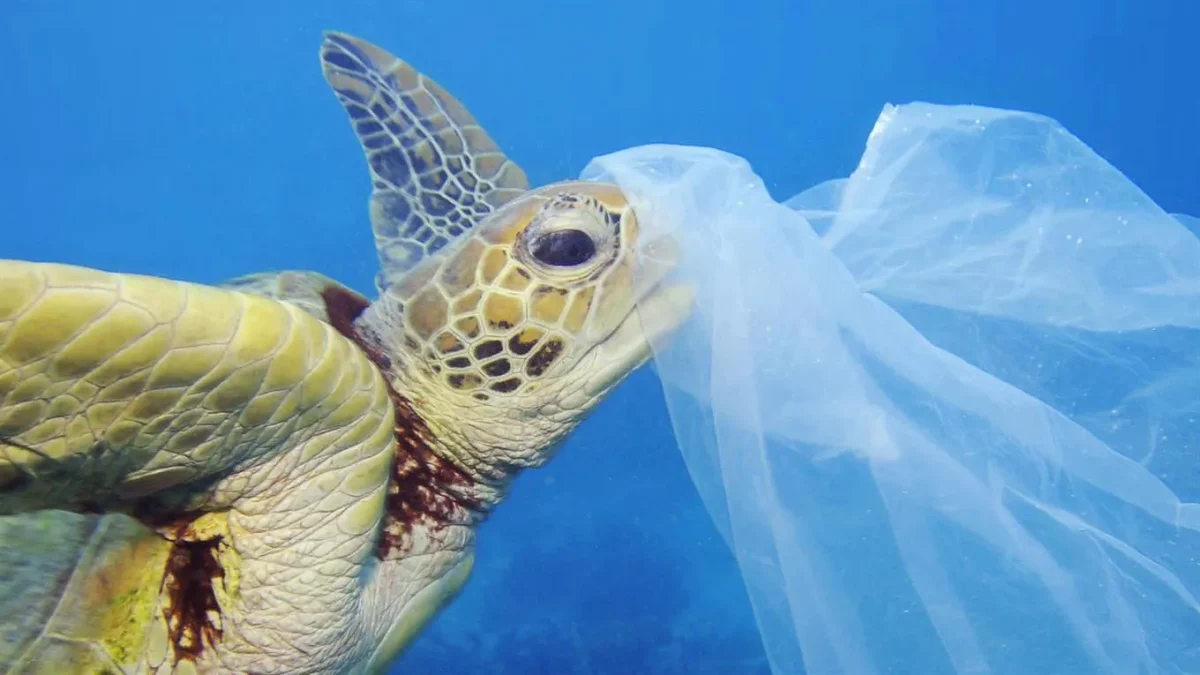
The effects of plastics on marine organisms depend to a large extent on the size of both. Clearly, larger plastics almost exclusively affect large organisms.
The most obvious effects are:
In addition, many plastics have harmful substances attached to them, such as pollutants, which can be assimilated by animals causing metabolic and endocrine damage.
Another problem associated with plastics is that they can be vectors for the transport of exotic species, which can colonize other environments in remote areas and eventually become invasive.
Almost any organism, depending on its size and feeding system, can incorporate microplastics into its body. Subsequently, these plastics can be transferred to other organisms in marine food webs, depending on “who eats whom”.
The processes of incorporation, transfer and fate of plastics in marine organisms are complex and many of them are not sufficiently understood. It is true that, once ingested, plastics pass through the digestive system and part of them are expelled. But another part is retained and, depending on its size, may be incorporated into other organs and/or tissues. As for fish, we generally do not eat the digestive system of fish, but mainly the muscle, so it is unlikely that, when eating fish, we ingest plastics of a certain size.
In any case, there could be some other ways of incorporation (through water, sea salt, etc.), but this has not been very well studied. It should not be ruled out that part of the microplastics that can be ingested could come from the small fibers that are released from food packaging, clothing and other plastic objects that invade our daily lives.
The presence of plastics in the sea is a global problem. They have been found in all the seas and coasts of the world. The cost of eliminating them from beaches and recreational areas is high. They affect various economic activities and cause the death of many marine animals, from small invertebrates to large mammals, birds and fish. They enter the marine food chain.
The only really powerful and effective way to alleviate the problem is by reducing the use of plastics.
At the individual level, each person can make small changes to reduce plastic use:
When there is no choice but to use plastics, try to reuse them. When it is no longer possible to continue reusing the products or when we have containers to throw away, we must deposit them in the yellow container for recycling. But we must remember that recycling more does not solve the problem, it is not synonymous with reducing pollution.
First reduce, then reuse and finally recycle.
Cleaning beaches also helps to reduce the amount of plastic that ends up in the sea.
Small gestures such as these, together with social awareness and sensitization, accompanied by appropriate legislation and actions aimed at better waste management at sea, will allow plastic levels to decrease in the environment.